Quick Summary
1. The short answer: Source:
2. Also covered: Which CAVA dip has the fewest calories?
3. Also covered: Why serving size matters more than the name
4. Also covered: Crazy Feta: more protein, but also more sodium
Table of Contents
- 1. Which CAVA dip has the fewest calories?
- 2. Why serving size matters more than the name
- 3. Crazy Feta: more protein, but also more sodium
- 4. Hummus: what do you gain?
- 5. Tzatziki: lowest in calories and sodium in this group
- 6. What happens if you add two dips?
- 7. How to compare the dips inside a real bowl
- 8. So which dip should you choose?
1. Which CAVA dip has the fewest calories?
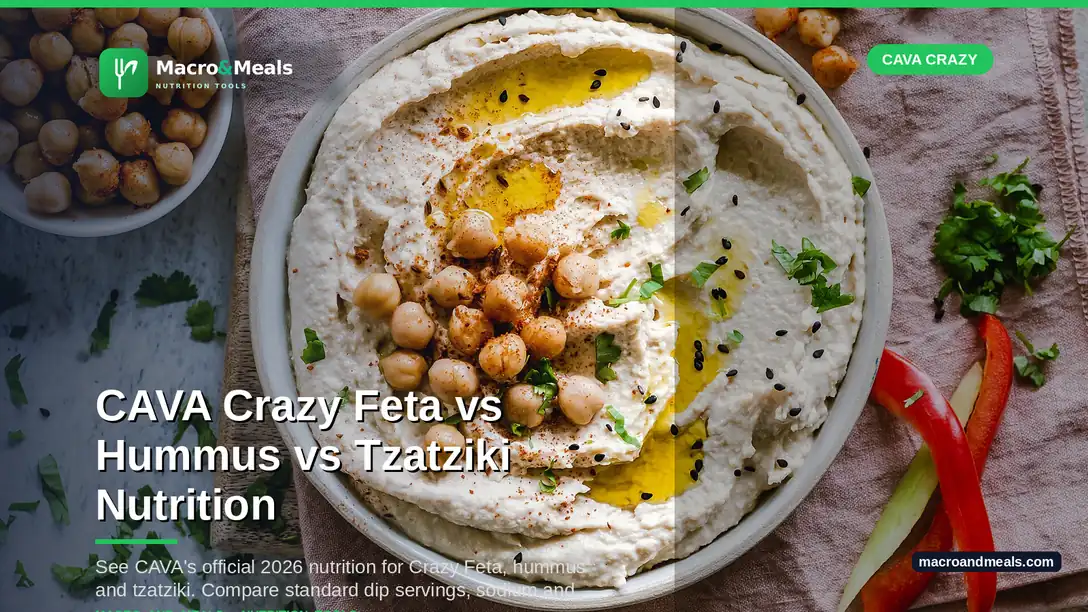
For the restaurant's standard single dip servings, tzatziki has the lowest listed calories among these three choices. CAVA's March 2026 US guide lists 30 calories for tzatziki, 50 for hummus and 70 for Crazy Feta. All three are legitimate bowl additions, and the difference between them is smaller than what you may see when you change a full base or main.
The more interesting comparison is what you get with those calories: protein, fat, sodium and the flavor you actually want. A dip is meant to contribute to the experience of the meal, not to win a numerical competition in isolation.
| Standard restaurant dip | Tzatziki | Hummus | Crazy Feta |
|---|---|---|---|
| Calories | 30 | 50 | 70 |
| Protein | 2 g | 2 g | 4 g |
| Total fat | 2.5 g | 2.5 g | 6 g |
| Carbohydrates | 1 g | 4 g | 1 g |
| Fiber | 0 g | 2 g | 0 g |
| Saturated fat | 1.5 g | 0 g | 3 g |
| Sodium | 60 mg | 90 mg | 230 mg |
Source: CAVA official restaurant nutrition guide, March 2026. The values describe one standard menu dip serving, not a whole grocery container or side order.
2. Why serving size matters more than the name
There are at least three situations people can mix up when searching for CAVA dip nutrition: a small spread added to a restaurant bowl, a separately ordered side dip, and a branded container bought at a grocery store. They may carry the same familiar name, but they do not necessarily contain the same quantity.
For a build-your-own restaurant bowl, use the row labeled dips and spreads in the current CAVA restaurant guide. Do not borrow values from a retail package without checking its weight and ingredients. CAVA also sells packaged dips through retail channels, where the nutrition panel is tied to a specific labeled serving.
Even within a restaurant order, extra scoops change the total. A single selection labeled 70 calories is not a guarantee that every portion a human server provides will weigh exactly the same. The best tracker uses standardized company information while being honest about real-world variation.
3. Crazy Feta: more protein, but also more sodium
Crazy Feta contains 4 grams of protein per published serving, versus 2 grams in the other two dips. It also has the most sodium here at 230 milligrams. That does not make it a poor choice. It shows why a one-nutrient ranking can miss useful context.
If you already have a substantial protein main in your bowl, two extra grams from a dip may not matter much to your overall decision. You might choose Crazy Feta simply because its rich, tangy flavor works with your preferred toppings. If sodium is a concern, however, the sodium difference is a concrete fact worth considering.
4. Hummus: what do you gain?
The listed hummus provides 2 grams of fiber, while both tzatziki and Crazy Feta show zero grams of fiber at their standard servings. That is not a huge amount compared with a full portion of beans or lentils, but it does add something different from the other dips.
Hummus also contains 4 grams of carbohydrates and 2 grams of protein per standard restaurant serving. If you have been told that hummus is “just fat” or “just protein,” the actual company figures show why neither description is particularly useful. The whole bowl is still the meaningful unit of comparison.
5. Tzatziki: lowest in calories and sodium in this group
At 30 calories and 60 milligrams of sodium, tzatziki is lowest in both of those published measures among the three. It also has 2 grams of protein, the same listed protein amount as hummus. Its nutritional pattern is different because it is a yogurt-based dip rather than a bean dip or whipped cheese preparation.
If you're managing a dairy allergy, those ingredient differences matter much more than the 20-calorie gap between tzatziki and hummus. Always check the current allergen guide. CAVA cautions that shared preparation and ingredient substitutions can affect allergen exposure.
6. What happens if you add two dips?
Suppose you choose one standard hummus serving plus one standard tzatziki serving. The combined dip components supply 80 calories, 4 grams of protein, 5 grams of total fat, 5 grams of carbohydrates, 2 grams of fiber and 150 milligrams of sodium, based on the standard servings in the March 2026 guide.
This small worked example shows why it pays to add more than calories. The 2 grams of fiber come from hummus, while both dips contribute protein and fat. It also illustrates the value of a calculator that exposes every ingredient entry instead of giving readers only one unexplained total.
These numbers describe only the dips. The base, main, dressing and remaining toppings are separate.
7. How to compare the dips inside a real bowl
Choose a base, one main and the same toppings. Then make three copies of the order, changing only the dip. The difference between each complete bowl is now the difference between the dip entries, not a mix of unrelated customizations. This is much more informative than comparing three screenshots of completely different bowls.
Try that controlled comparison in the MacroAndMeals CAVA nutrition calculator after confirming its dip rows match the current restaurant guide. Label restaurant serving quantities clearly so a user does not mistake a side dip or grocery package for one bowl scoop.
8. So which dip should you choose?
Choose tzatziki if the lowest listed calories and sodium among these three are your priority. Choose hummus if you want a little more fiber from the dip. Choose Crazy Feta if you prefer its flavor and its slightly higher protein content, while taking the higher sodium into account. None of these choices determines the nutrition of the whole meal by itself.
Sources
- CAVA Restaurant Nutrition and Allergen Guide, March 2026
- CAVA current nutrition and allergy information hub
Check Cava Nutrition First
Use the free Cava calculator to build your order and see the totals before you go.