Quick Summary
1. The short answer: Not necessarily.
2. Also covered: Does "reduced sodium" mean a soup is low in sodium?
3. Also covered: What the FDA terms mean
4. Also covered: A reduced-sodium soup can still contain plenty of sodium
Table of Contents
- 1. Does "reduced sodium" mean a soup is low in sodium?
- 2. What the FDA terms mean
- 3. A reduced-sodium soup can still contain plenty of sodium
- 4. No salt added is not the same as sodium free
- 5. Watch serving sizes, especially in soup
- 6. Three checks for a sensible store comparison
- 7. Should you always buy the lowest-sodium soup?
- 8. The useful takeaway
1. Does "reduced sodium" mean a soup is low in sodium?
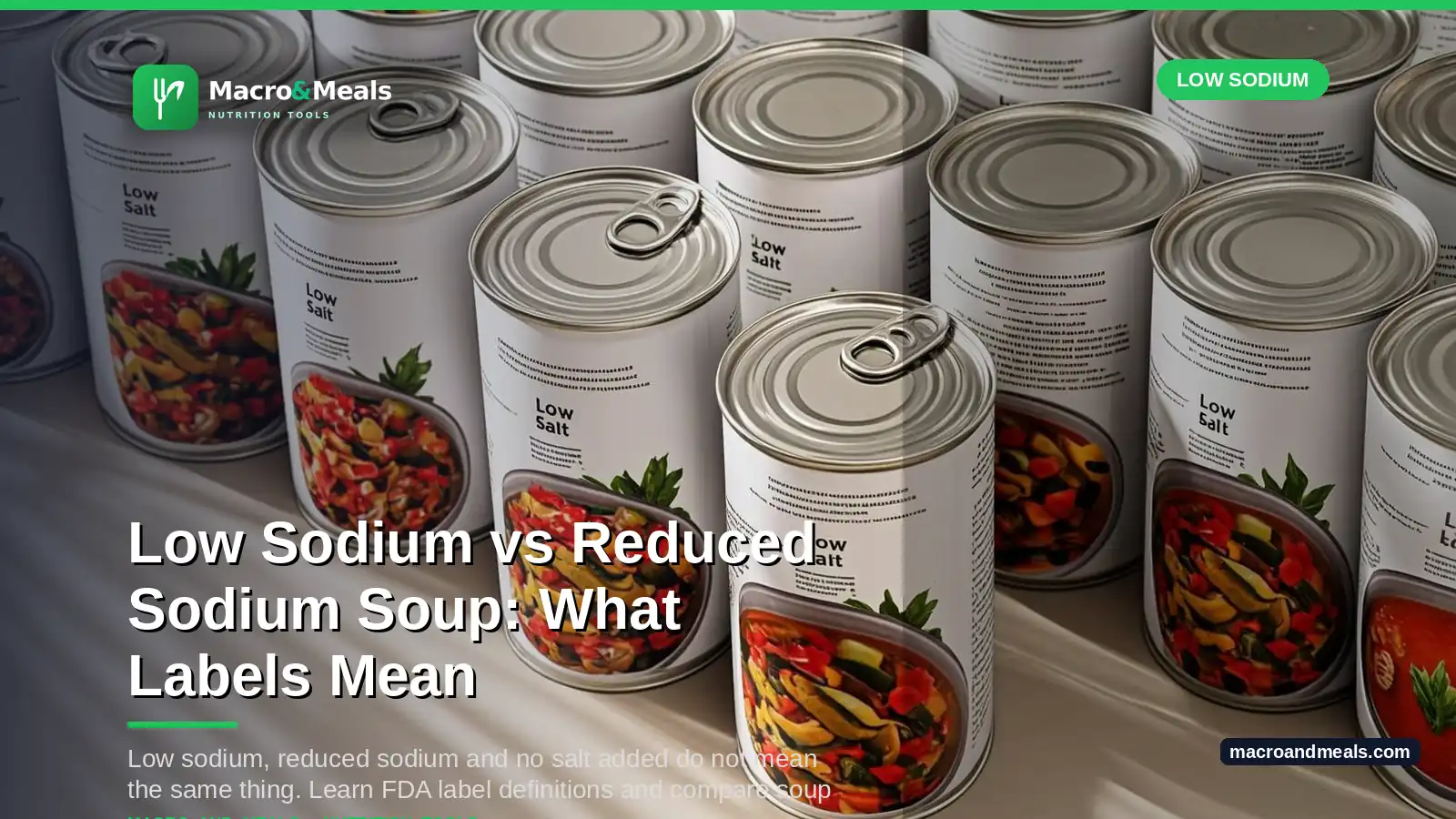
Not necessarily. Under U.S. FDA nutrition-label guidance, "low sodium" generally means 140 milligrams of sodium or less per serving. "Reduced sodium" means at least 25% less sodium than the regular comparison product. And "no salt added" tells you that salt was not added during processing, not that the finished soup contains zero sodium.
These are three different label claims. The distinction matters when two similar-looking soup cans sit on the same shelf and you are trying to compare what they actually contain. Read the sodium milligrams next to the serving size before making a decision.
2. What the FDA terms mean
| Front-of-can wording | What to check |
|---|---|
| Low sodium | Generally 140 mg sodium or less per serving under applicable FDA claim criteria |
| Very low sodium | Generally 35 mg or less per serving |
| Sodium free | Generally fewer than 5 mg per serving |
| Reduced sodium | At least 25% less than the appropriate regular reference food |
| Light in sodium | At least 50% less sodium than the comparison product under applicable criteria |
| No salt added / Unsalted | No salt was added during processing; the food may still contain sodium |
Source: FDA, Sodium in Your Diet. These simplified examples apply to conventional label comparisons; the formal rules also include reference amounts and special criteria for certain meals or small servings. Do not treat this as legal advice for product labeling.
3. A reduced-sodium soup can still contain plenty of sodium
Imagine a regular soup that contains 800 milligrams sodium per labeled serving. A revised version at 600 milligrams has 25% less sodium than that reference serving: `(800 - 600) / 800 x 100 = 25%`.
That is an illustrative calculation, not a claim about a named manufacturer. The reduced version would still contain 600 milligrams in this example, well above the general 140-milligram low-sodium threshold. A comparison label may communicate a meaningful improvement without making the product objectively low in sodium.
This is why the front panel and the Nutrition Facts panel answer different questions. The claim tells you something about how the product relates to a defined standard or reference. The milligram figure tells you what that labeled serving actually contains.
4. No salt added is not the same as sodium free
Foods can contain naturally occurring sodium, and recipes may include other sodium-containing ingredients. "No salt added" concerns added salt during processing. Read the sodium number even when the front label says "unsalted."
The ingredient list can also reveal whether a soup contains potassium-based salt substitutes. Potassium matters for some people with kidney conditions or certain medications. Do not treat a sodium-reduced food as medically suitable for you solely because it uses an alternative seasoning; consult your clinician when you have individual restrictions.
5. Watch serving sizes, especially in soup
One soup container can include several servings. A label might describe half a cup of condensed soup, while another refers to a full container of ready-to-eat soup. Those are not interchangeable serving descriptions. If you eat the whole can, multiply the per-serving sodium by the number of servings, accounting for rounding on the label.
For example, using purely hypothetical values: 450 milligrams per serving times two servings equals 900 milligrams for the container. If the Nutrition Facts declares "about 2.5 servings," your calculation should acknowledge that the result is approximate.
When you dilute condensed soup with plain water, you add volume but not additional sodium. You do not erase the sodium already in the can. If you mix in broth, cheese or seasoned croutons, count those additions separately. Comparing sodium per cup of prepared soup is useful, but make sure you have not accidentally changed the amount of actual soup concentrate being eaten.
6. Three checks for a sensible store comparison
1. Compare milligrams for the amount you will eat. Start with actual servings, not just the label claim. If you plan to finish a whole can, calculate that total.
2. Compare similar soup types. Two tomato soups may differ in ingredients, yield and serving sizes. Use grams or prepared volume to make the comparison more transparent, but retain the product's own label figures.
3. Check the rest of the meal. Crackers, bread, cheese and deli meat may add sodium. That does not make the soup a forbidden food; it means the entire meal is more informative than the can's headline.
You can use a MacroAndMeals food comparison calculator for a side-by-side view when its entries match the exact products. The current package label remains the reference for SKU-specific claims.
7. Should you always buy the lowest-sodium soup?
There is no single correct answer for everyone. Sodium is one useful comparison, but ingredients, protein, fiber, portion size, flavor preference, access and cost can matter too. The FDA's nutrition guidance provides a general framework; an individual's medically directed target can differ.
If you are following advice for high blood pressure, kidney disease or another condition, ask your qualified care team what total sodium amount and other nutrient limits fit your situation. This article explains labels, not a personalized treatment plan.
8. The useful takeaway
"Low sodium" describes an amount, "reduced sodium" describes a comparison, and "no salt added" describes how the food was processed. To choose a soup confidently, verify the product's sodium milligrams and serving size. A less-salty-sounding name alone does not tell you the total sodium in your bowl.
Sources
- FDA, Sodium in Your Diet: claims and Daily Value.
- FDA, Label Claims for Conventional Foods and Dietary Supplements.
- FDA, Nutrition Labeling and Education Act sodium claim criteria.
Compare Any Two Foods Side by Side
Put your options head to head and see the numbers that matter.