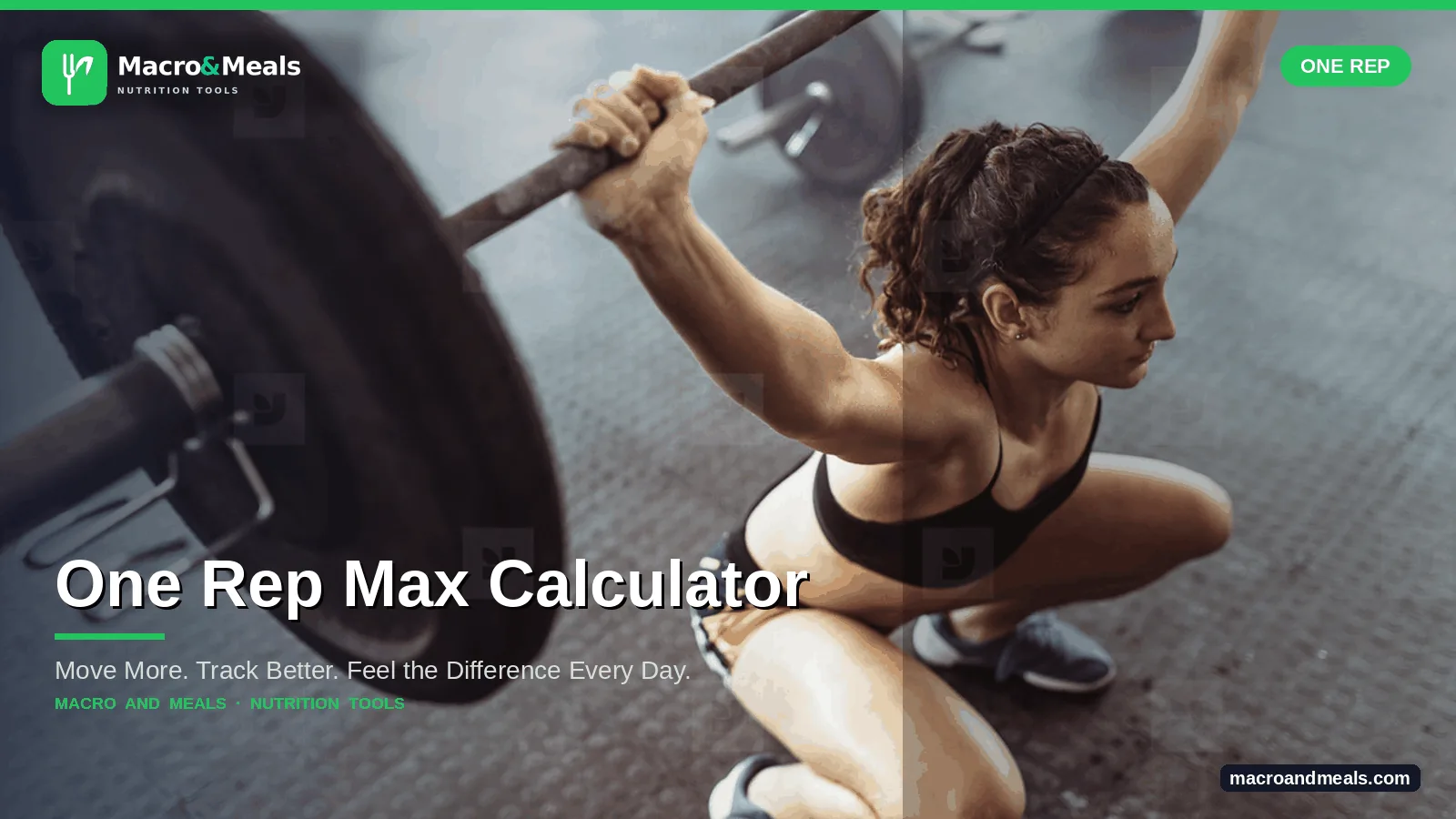
One Rep Max Calculator
Calculate your one-rep max (1RM) for any exercise using multiple proven formulas.
Enter Your Values
About the One Rep Max Calculator
Your one-rep max (1RM) is the maximum weight you could lift for a single repetition of an exercise. It is a key benchmark in strength training, used to gauge progress and to set the right weights for your workouts. This calculator estimates your 1RM from a set you have already done (the weight lifted and the number of reps), so you can find it without the risk of actually attempting a true maximal lift.
I appreciate this tool because it makes strength training both smarter and safer. Attempting an all-out single rep carries injury risk, especially without a spotter, and estimating your 1RM from a normal working set gives you the number you need while keeping you safe.
What a one-rep max is for
Knowing your 1RM (even an estimate) lets you train with precision. Most strength programs prescribe weights as a percentage of your 1RM, for example lifting at 70 or 80 percent for a given number of reps. It is also a clear way to track progress: when your estimated 1RM climbs, you know you are getting stronger. Without it, you are often guessing at how heavy to go.
How the estimate works
The calculator uses established formulas (such as the Epley and Brzycki equations) that predict your 1RM from the weight you lifted and the reps you completed. The logic is straightforward: the more reps you can do with a given weight, the higher your maximum must be. The estimate is most accurate when based on a set in the lower rep range (roughly 2 to 10 reps), because predictions drift as the rep count gets very high.
Using it to program your training
Once you have your estimated 1RM, you can set working weights with confidence. For building strength, programs often use heavier loads (around 80 to 90 percent of 1RM) for low reps; for building muscle size, moderate loads (around 65 to 80 percent) for more reps; and for endurance, lighter loads for higher reps. Recalculate every few weeks as you progress, so your percentages keep pace with your growing strength.
Train safely
A few sensible habits: always warm up thoroughly, use good form before chasing heavier weight, and use a spotter or safety bars for big lifts. Because this is an estimate, treat percentage-based weights as a starting point and adjust to how the set actually feels on the day, since strength fluctuates with sleep, stress and recovery. The number serves your training, not the other way around.
Sources & method
This calculator uses established, peer-reviewed formulas and reference ranges from recognized health and nutrition authorities. Results are estimates for general education, not a medical diagnosis. For decisions about your health, consult a qualified clinician. Reviewed by Macro & Meals Editorial Team, Content editor.
Frequently Asked Questions
Your one-rep max (1RM) is the heaviest weight you could lift for a single repetition of an exercise. It is a key strength benchmark used to track progress and to set training weights as a percentage of your maximum.
The calculator uses formulas like the Epley and Brzycki equations to predict your 1RM from a set you have already done: the weight lifted and the reps completed. The more reps you can manage with a given weight, the higher your estimated maximum, which avoids the risk of attempting a true maximal lift.
It is most accurate when based on a set in the lower rep range, roughly 2 to 10 reps, because predictions drift as the rep count gets very high. It is an estimate rather than a guarantee, so treat percentage-based training weights as a starting point and adjust to how the lift feels.
Set working weights as a percentage of your 1RM: heavier loads (around 80 to 90 percent) for low-rep strength work, moderate loads (around 65 to 80 percent) for muscle size, and lighter loads for endurance. Recalculate every few weeks so your percentages keep pace as you get stronger.