Quick Summary
1. The short answer: Is albacore the same as canned light tuna?
2. Also covered: What the FDA actually classifies
3. Also covered: Are light and white tuna different species?
4. Also covered: What about protein?
Table of Contents
If you are choosing between cans at the grocery store, you may notice that one says chunk light and another says solid white. The protein labels can look similar. The species and mercury guidance deserve more attention than the color of the fish alone.
1. What the FDA actually classifies
| Fish label or category | FDA/EPA fish advice category |
|---|---|
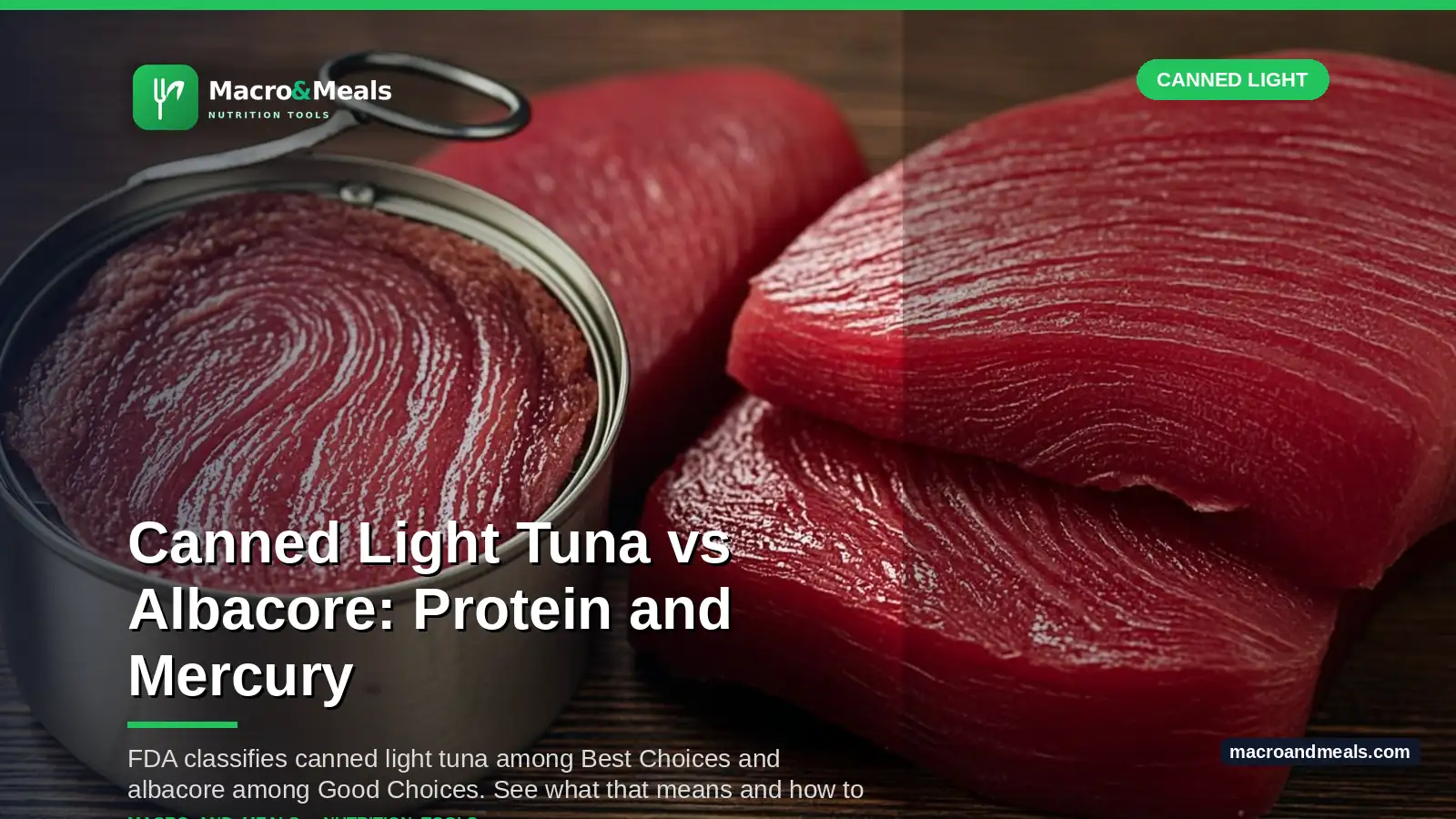
| Canned light tuna, including skipjack | Best Choices |
| Albacore or white tuna, canned or fresh | Good Choices |
| Bigeye tuna | Choices to Avoid, highest mercury category |
This summary reflects the FDA's public fish advice chart reviewed October 19, 2026. It is not a personalized medical recommendation, and the advice is written specifically for people who might become pregnant, are pregnant or breastfeeding, and children ages 1 through 11.
The difference between Best and Good does not mean that albacore contains no nutritional value or that every can has an identical mercury concentration. It means the categories account for comparative mercury levels and help guide safer fish choices in populations that can be more vulnerable.
2. Are light and white tuna different species?
Often, yes. Light tuna commonly includes skipjack, while white tuna in US canned products refers to albacore. These names are not simply different descriptions of the same fish's color after cooking.
Skipjack and albacore also differ in texture and flavor. White albacore can have larger, firmer pieces; chunk light tuna often has smaller flakes. Product form such as solid versus chunk also affects presentation. None of these texture words tells you the exact amount of protein, sodium or mercury in the can without more information.
A 5-ounce tuna can may weigh less after draining. It may also report several servings rather than one. Before comparing nutrition, choose two products with the same edible drained weight or calculate a standardized per-100-gram amount from verified labels.
3. What about protein?
Both types can be useful protein foods. But declaring one variety the higher-protein choice for every brand would overstate the evidence. Processing, water or oil packing and drained serving size affect what the label reports.
For an example of how packaging affects the result, StarKist's 5-ounce Chunk Light in Water lists 20 grams of protein per drained 113-gram can. This is a verified light tuna example, not a matched albacore-versus-light product test. To rank protein between the varieties, a comparable current albacore label must be selected and verified.
If your practical goal is to make lunch, that protein can be combined with bread, beans, vegetables or rice. The rest of the meal affects how much fiber, sodium and energy the plate provides.
4. Why does mercury matter?
Mercury occurs in the environment and can accumulate in fish. Different fish types have different typical mercury levels. The FDA and EPA fish chart is designed to balance the nutrients that fish can provide with attention to mercury exposure.
Do not use a social media shortcut like white tuna is unsafe or light tuna is unlimited. The advice depends on the person's life stage, portions and the full pattern of fish consumption. It also recommends variety among fish that fit the relevant category.
For people who are pregnant, breastfeeding or feeding young children, read the FDA's current chart and serving guidance directly. A licensed clinician or registered dietitian can help interpret it in individual circumstances. This page does not specify an individualized weekly tuna allowance.
5. What if I am not in one of the highlighted groups?
The categories still convey useful information about relative mercury concern, but the FDA chart is specifically presented for those named populations. Do not transform it into a medical limit for every adult without additional applicable guidance.
For a general grocery decision, it is reasonable to consider variety in seafood and compare the nutrition and portion facts on the particular cans. Choose the species, packing medium and taste you prefer while understanding that lower-mercury choices can be important for frequent consumption.
6. A practical canned tuna shopping checklist
- Look for canned light or albacore/white on the package.
- Confirm whether it is packed in water or oil.
- Read the serving size, drained weight and servings per container.
- Compare protein and sodium using a like-for-like portion.
- Use the FDA fish chart rather than a guessed mercury number.
- For pregnancy or child-specific questions, follow the FDA's relevant age or life-stage guidance and seek professional advice as needed.
You can compare food-label nutrients using the MacroAndMeals Food Comparison Calculator when its branded entries match the packages. The calculator cannot establish mercury concentration unless validated mercury data has been separately supplied.
7. Common questions
Is albacore the same as canned light tuna? No. The categories refer to different tuna types in the FDA advice.
Does higher protein mean higher mercury? Protein content does not determine mercury concentration.
Can a can say 'white' and 'light' at the same time? Read the full species and product description rather than relying on one isolated marketing word.
Which is on the FDA Best Choices list? Canned light tuna, including skipjack. Albacore is in Good Choices.
8. Bottom line
Canned light and albacore tuna both offer convenient protein, but they differ in mercury guidance. Use the official FDA classification for safety-related questions and the exact product label for macros. Those are two separate kinds of evidence, and both matter for an informed choice.
Sources
- https://www.fda.gov/food/consumers/advice-about-eating-fish
- https://starkist.com/product/chunk-light-tuna-in-water-can/
Editorial review: Qualified nutrition or clinical review required; matched albacore label not yet included. Research checked October 19, 2026. The draft does not represent a claim that an expert has approved it.
Compare Any Two Foods Side by Side
Put your options head to head and see the numbers that matter.