
Waist-to-Hip Ratio Calculator
Calculate your waist-to-hip ratio to assess abdominal fat distribution and related health risks.
Enter Your Values
About the Waist-to-Hip Ratio Calculator
Your waist-to-hip ratio compares the size of your waist to your hips, and it is one of the simplest, most useful health measures you can take at home. It matters because where you carry fat is a real health signal: more fat around the middle (an apple pattern) is linked with higher metabolic risk than fat around the hips and thighs (a pear pattern). This calculator works out your ratio from two tape measurements.
I love this one for its simplicity and honesty. It needs only a tape measure, it captures something BMI misses entirely, and the World Health Organization actually uses it as a risk indicator. A minute of measuring tells you something genuinely worth knowing.
Why fat location matters
Not all body fat behaves the same way. Fat stored deep in the abdomen (visceral fat) is more metabolically active and more strongly linked to type 2 diabetes, heart disease and other risks than fat stored on the hips and thighs. The waist-to-hip ratio is a quick way to gauge that pattern, which is exactly why it can flag risk even in people whose BMI looks normal.
How to measure correctly
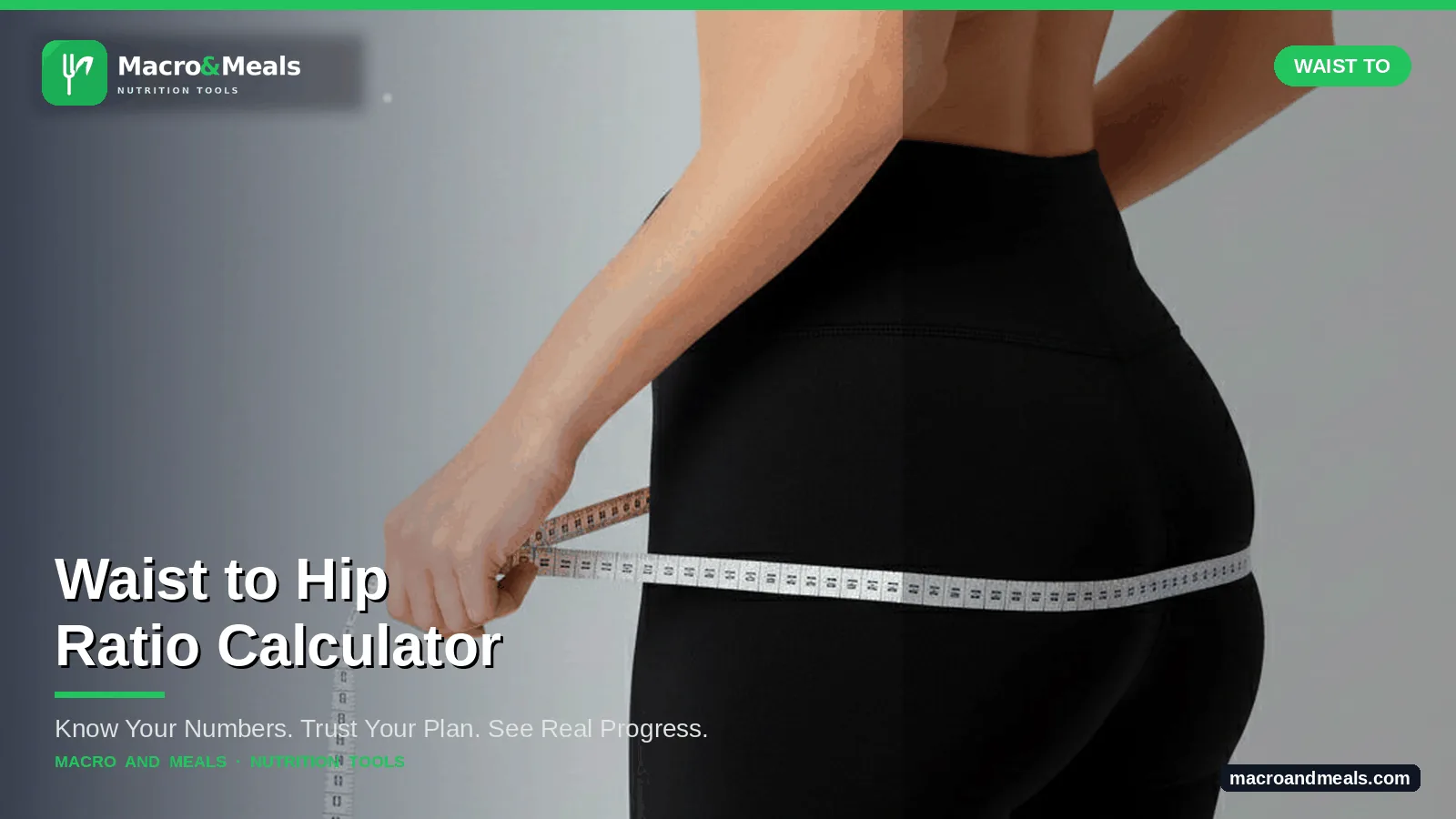
Accuracy makes the result meaningful. Measure your waist at its narrowest point, usually just above the belly button, without sucking in or letting the tape compress your skin. Measure your hips at their widest point around the buttocks. Keep the tape level and snug, breathe normally, and take each reading twice. Then the calculator divides waist by hips to give your ratio.
How to read your ratio
The World Health Organization considers risk to rise above roughly 0.90 for men and 0.85 for women, with higher ratios indicating more central fat. Below those figures is generally favorable. The calculator gives your number; use it alongside waist circumference and BMI for a rounded view. As always, a single reading is a signal to consider, not a diagnosis.
Improving it
The reassuring part is that central fat tends to respond well to lifestyle change. Regular activity (both cardio and strength), a whole-food diet rich in fiber, limiting added sugars and ultra-processed foods, enough sleep and managing stress all help reduce waist fat over time. There is no spot-reduction trick, but overall healthy habits genuinely shift this ratio, and you can track the progress with the same tape measure.
Sources & method
This calculator uses established, peer-reviewed formulas and reference ranges from recognized health and nutrition authorities. Results are estimates for general education, not a medical diagnosis. For decisions about your health, consult a qualified clinician. Reviewed by Macro & Meals Editorial Team, Content editor.
Frequently Asked Questions
The World Health Organization considers risk to rise above roughly 0.90 for men and 0.85 for women, with lower ratios generally more favorable. Use your number alongside waist circumference and BMI, and treat a higher reading as a signal to look closer rather than a diagnosis.
Because where you carry fat is a real health signal. Fat stored deep in the abdomen is more metabolically active and more strongly linked to diabetes and heart disease than fat on the hips and thighs. The ratio captures that pattern, which is why it can flag risk even when BMI looks normal.
Measure your waist at its narrowest point, usually just above the belly button, and your hips at their widest point around the buttocks. Keep the tape level and snug without compressing the skin, breathe normally, and take each reading twice for accuracy.
Reducing central fat is the goal, and it responds well to lifestyle change: regular cardio and strength training, a fiber-rich whole-food diet, limiting added sugars and ultra-processed foods, good sleep and stress management. There is no spot-reduction trick, but overall healthy habits genuinely shift the ratio.