⚡ Quick Summary
1. The short answer: 1. Look at the actual protein serving.
2. Also covered: Is more protein always better than higher-quality protein?
3. Also covered: What does protein quality mean?
4. Also covered: Four useful ways to compare two foods
Table of Contents
- 1. Is more protein always better than higher-quality protein?
- 2. What does protein quality mean?
- 3. Four useful ways to compare two foods
- 4. What a protein-gram table can and cannot tell you
- 5. Do plant proteins need to be combined at every meal?
- 6. Does quality matter for strength training?
- 7. A useful example: chicken bowl versus lentil bowl
- 8. What to look for on a protein product label
- 9. The takeaway
1. Is more protein always better than higher-quality protein?
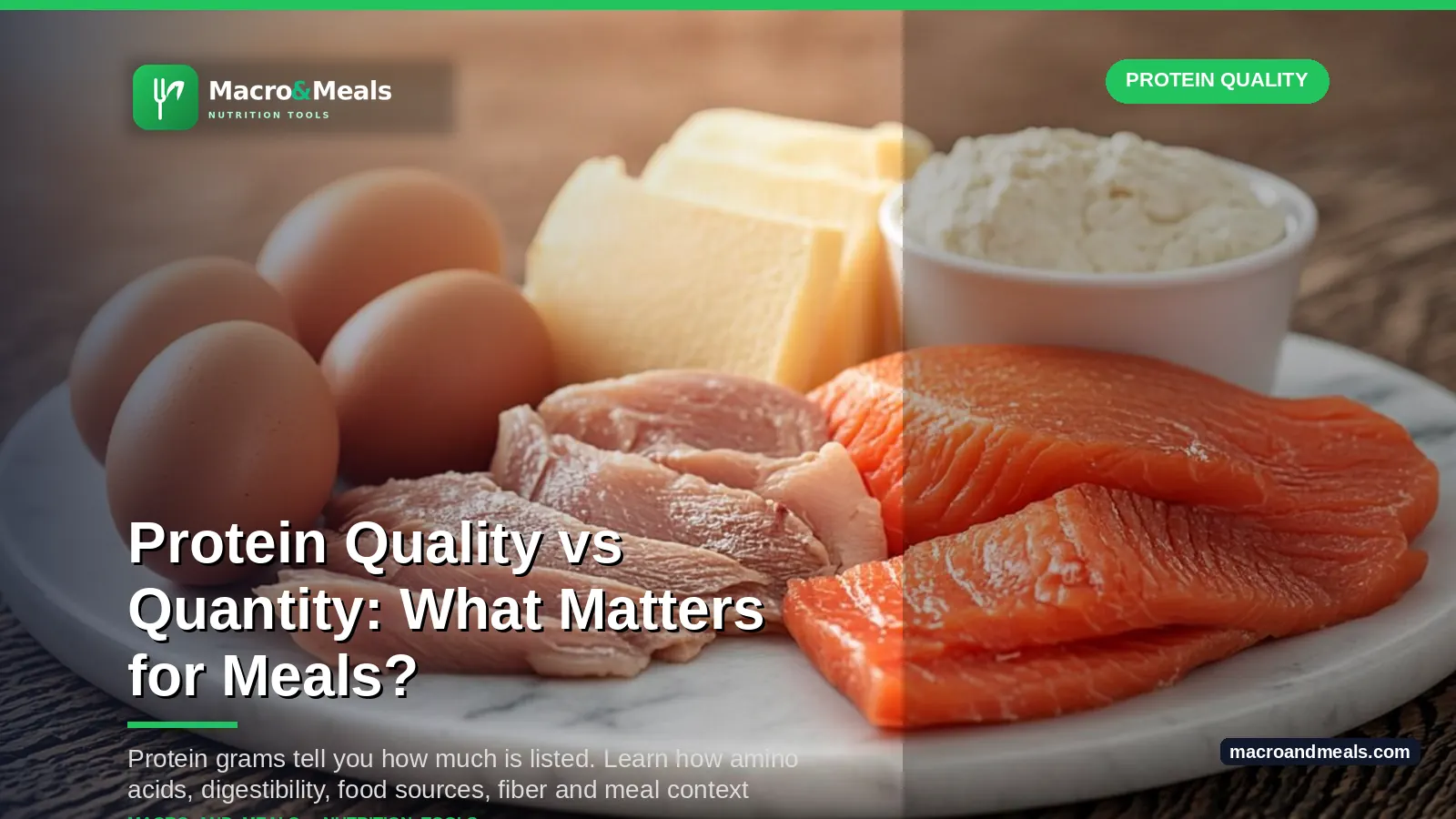
A larger protein number does not tell you everything about a meal. Protein quantity is the number of grams you consume. Protein quality refers to how well a protein supplies indispensable amino acids and how available those amino acids are for the body to use. In everyday life, the rest of the food matters too: fiber, fats, overall nutrient variety, portion size, preference, and cost.
A useful way to compare meals is to start with the total protein amount, then ask what foods provided it and what else the meal offers. You do not need to memorize amino acid charts before eating lunch.
2. What does protein quality mean?
Proteins are built from amino acids. The body can make some amino acids but must obtain certain indispensable ones from food. Different foods contain different amino acid patterns, and digestibility affects how those amino acids become available.
Scientists use methods including the Digestible Indispensable Amino Acid Score (DIAAS) to study protein quality. A peer-reviewed overview indexed on PubMed describes meaningful variation across protein sources and how combining plant proteins can improve the amino acid contribution of a meal.
That scientific distinction should not be turned into a simplistic claim that animal foods are always better or that plant foods are incomplete meals. People can obtain adequate protein from varied eating patterns, including plant-based diets. The appropriate focus is the overall diet and individual requirements.
3. Four useful ways to compare two foods
1. Look at the actual protein serving. A food labeled “high protein” can come in several sizes. Compare the protein grams in the quantity you will really eat.
2. Look at the food source. Soy foods, lentils, beans, fish, meat, eggs, and dairy are not nutritionally identical. A meal's mix of protein and other nutrients may matter more than one isolated figure.
3. Look at preparation. Fried, breaded, sweetened, or heavily sauced versions may change the calories and other nutrients compared with a simpler preparation.
4. Consider the whole meal. A protein source served with vegetables, grains, or legumes offers a different overall eating experience from a protein shake on its own.
4. What a protein-gram table can and cannot tell you
Harvard Health's published protein food reference provides useful examples:
| Food and stated portion | Protein |
|---|---|
| 1 large egg | 6 g |
| 1/2 cup cooked black beans | 7 g |
| 1/2 cup cooked lentils | 9 g |
| 3 ounces baked tofu | 13 g |
| 3 ounces tempeh | 18 g |
| 3 ounces salmon | 19 g |
| 3 ounces chicken or turkey breast | 25 g |
These are reference protein amounts for specific servings, not a ranking of complete meal quality. They also do not account for every brand, cooking method, or person. The tofu and salmon rows cannot be compared fairly without thinking about the rest of the food, how much is eaten, and individual preferences.
5. Do plant proteins need to be combined at every meal?
You may have heard that rice and beans must be eaten together at exactly the same sitting to “make a complete protein.” That is not a practical requirement for most people who eat varied, adequate diets. A mix of legumes, grains, nuts, seeds, and soy products can supply complementary amino acid profiles across normal eating patterns.
The Harvard Health discussion of protein notes that people following plant-only diets can obtain adequate protein with a varied intake of appropriate foods. Someone with very restricted intake or specific medical needs should seek personalized professional advice.
6. Does quality matter for strength training?
It can. Strength training increases interest in total protein, meal timing, and availability of amino acids. But research does not justify dismissing total calories, training quality, rest, or the overall diet. The ISSN position stand discusses protein needs for active individuals and notes that the total pattern of protein consumption matters alongside training.
If you are choosing between two practical lunches, the better choice is not determined solely by which one has the highest theoretical protein quality score. Think about whether it provides enough food, a satisfying range of nutrients, and a manageable way to eat consistently.
7. A useful example: chicken bowl versus lentil bowl
A chicken bowl may provide more protein from its concentrated animal protein source. A lentil bowl may offer useful protein together with dietary fiber. Add grains or another protein source to the lentil bowl, and the comparison changes. Add beans and vegetables to the chicken bowl, and that meal changes too.
The right comparison is two actual recipes with measured amounts, not stereotypes about the foods. Use the MacroAndMeals protein calculator to understand an estimated daily protein target, and a meal or recipe calculator to inspect the food combination you are considering.
8. What to look for on a protein product label
Check the stated serving size, protein grams, calories, total sugars, added sugars where reported, saturated fat, sodium, allergens, and ingredient list. A product marketed as “protein-packed” may still include nutrients you want to compare with alternatives. That does not make it a forbidden food; it makes the label useful.
If a company cites a “complete protein” claim, look for the basis of that claim and the intended audience. Do not assume all products carrying the same headline have identical nutrition profiles.
9. The takeaway
Protein grams are a starting point. Protein quality adds information about amino acids and digestibility. The overall meal adds the rest of the context. Choose foods that supply protein in a way that fits your dietary pattern, health needs, preferences, and budget instead of chasing a single maximum number.
Sources
- Review of protein quality and DIAAS.
- Harvard Health: Practical pointers about protein.
- International Society of Sports Nutrition position stand.
- USDA MyPlate: Protein Foods Group.
Calculate Your Daily Protein Target
Find the protein intake that matches your body and goals.