
Skinfold Body Fat Calculator
Estimate body fat percentage from skinfold caliper measurements using the Jackson-Pollock method.
Enter Your Values
About the Skinfold Body Fat Calculator
The skinfold method estimates body fat by measuring the thickness of pinches of skin and the fat just beneath it at specific sites on your body, using a tool called calipers. It is a long-standing, affordable technique that fitness professionals have used for decades, and with practice it can track changes in body fat well. This calculator turns your caliper readings into an estimated body fat percentage.
I appreciate the skinfold method because it directly samples subcutaneous fat rather than inferring it from weight, which can make it quite informative. The catch is that it relies on good technique, so I will be honest about how to get reliable numbers and how to interpret them.
How the method works
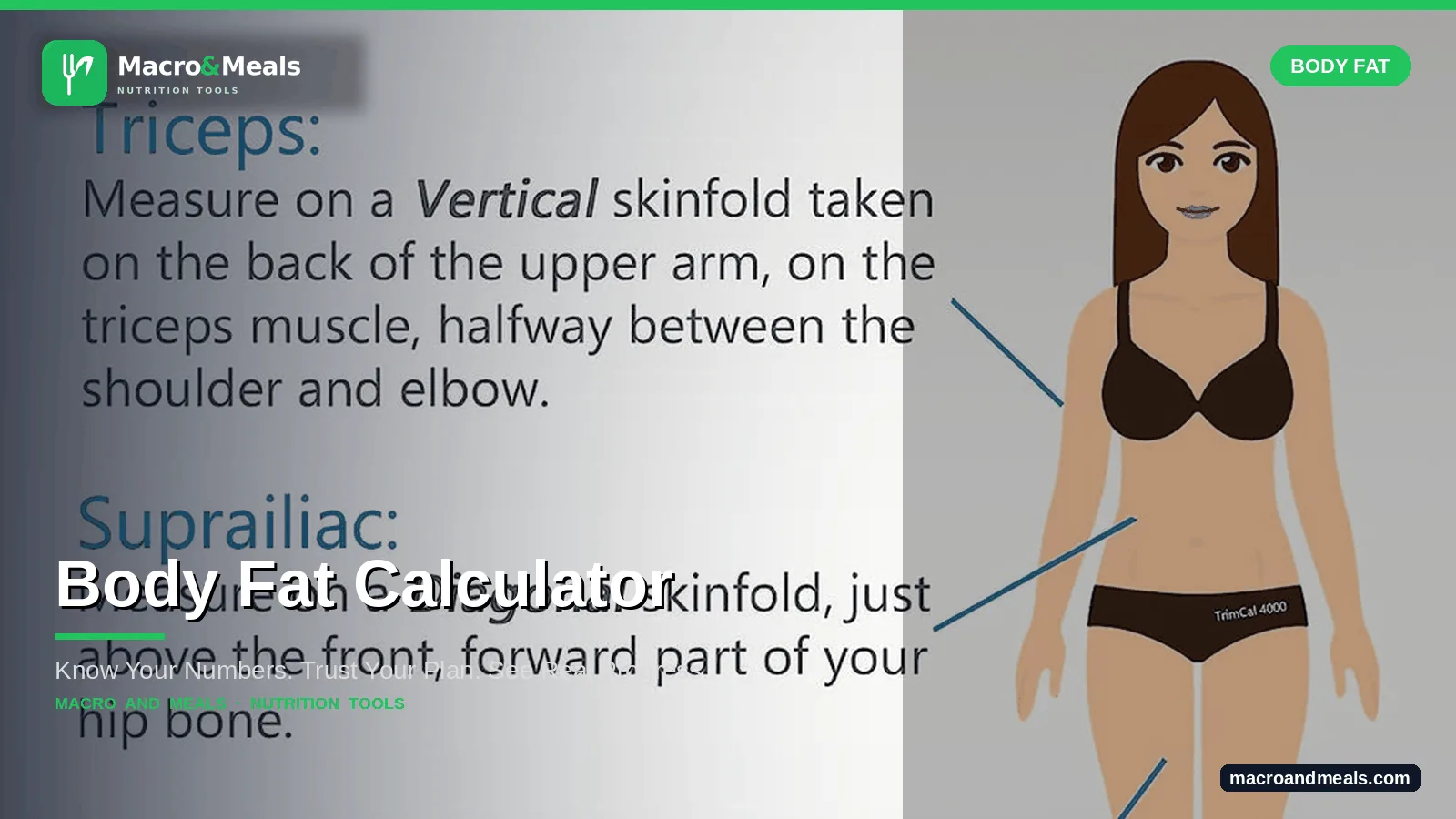
Calipers measure the thickness of a fold of skin and underlying fat at standard sites (common ones include the triceps, abdomen, thigh and the area near the hip). A validated equation (such as the Jackson-Pollock formulas) then converts the sum of those measurements, along with your age and sex, into an estimated body fat percentage. Because it samples fat directly, it can be more informative than weight-based estimates when done well.
Technique is everything
The accuracy of skinfold testing lives or dies on technique. You need to pinch at the exact site, take the reading at a consistent depth, and ideally have the same person measure each time. It takes practice, and readings from an untrained hand can vary a lot. If you are doing it yourself, follow the site instructions carefully, take each measurement two or three times, and use the average.
Reading the result
The calculator gives an estimated body fat percentage, which you can compare to general healthy ranges (broadly around 21 to 33 percent for women and 8 to 20 percent for men, varying with age and fitness). As with all field methods, the single number is approximate. Its real strength is tracking: measured consistently, it shows the direction of change over weeks, which is what matters most for a fat-loss or fitness goal.
How it compares to other methods
Skinfolds sit in the middle of the accuracy spectrum: more direct than the tape-measure (Navy) method, less precise than lab tools like DEXA scans, but far cheaper and easy to repeat. For most people, the best body fat method is simply the one you can do consistently. If you have access to calipers and good technique, skinfolds are an excellent way to follow your progress over time.
Sources & method
This calculator uses established, peer-reviewed formulas and reference ranges from recognized health and nutrition authorities. Results are estimates for general education, not a medical diagnosis. For decisions about your health, consult a qualified clinician. Reviewed by Macro & Meals Editorial Team, Content editor.
Frequently Asked Questions
Calipers measure the thickness of skin and underlying fat at standard sites such as the triceps, abdomen and thigh. A validated equation, like the Jackson-Pollock formulas, then converts those readings along with your age and sex into an estimated body fat percentage. It samples fat directly rather than inferring it from weight.
It can be quite good when technique is consistent, sitting between the tape-measure method and lab scans in accuracy. Its weakness is that it depends heavily on correct pinching and consistent depth, so untrained readings vary. Taking each measurement two or three times and averaging improves reliability.
Common protocols use three or seven sites, depending on the formula. More sites can improve accuracy, but consistency matters more than the exact number: measure the same sites the same way each time, ideally with the same person taking the readings, so your trend is meaningful.
It is generally a bit more direct, since it samples fat rather than estimating from circumferences, but it needs calipers and good technique. The Navy method is easier and needs only a tape. The best method is the one you can perform consistently, since both are most valuable for tracking change.