Quick Summary
1. The short answer: First: The official restaurant website or app.
2. Also covered: What US rules actually require
3. Also covered: The best places to look, in order
4. Also covered: Why calories cannot reveal protein by themselves
Table of Contents
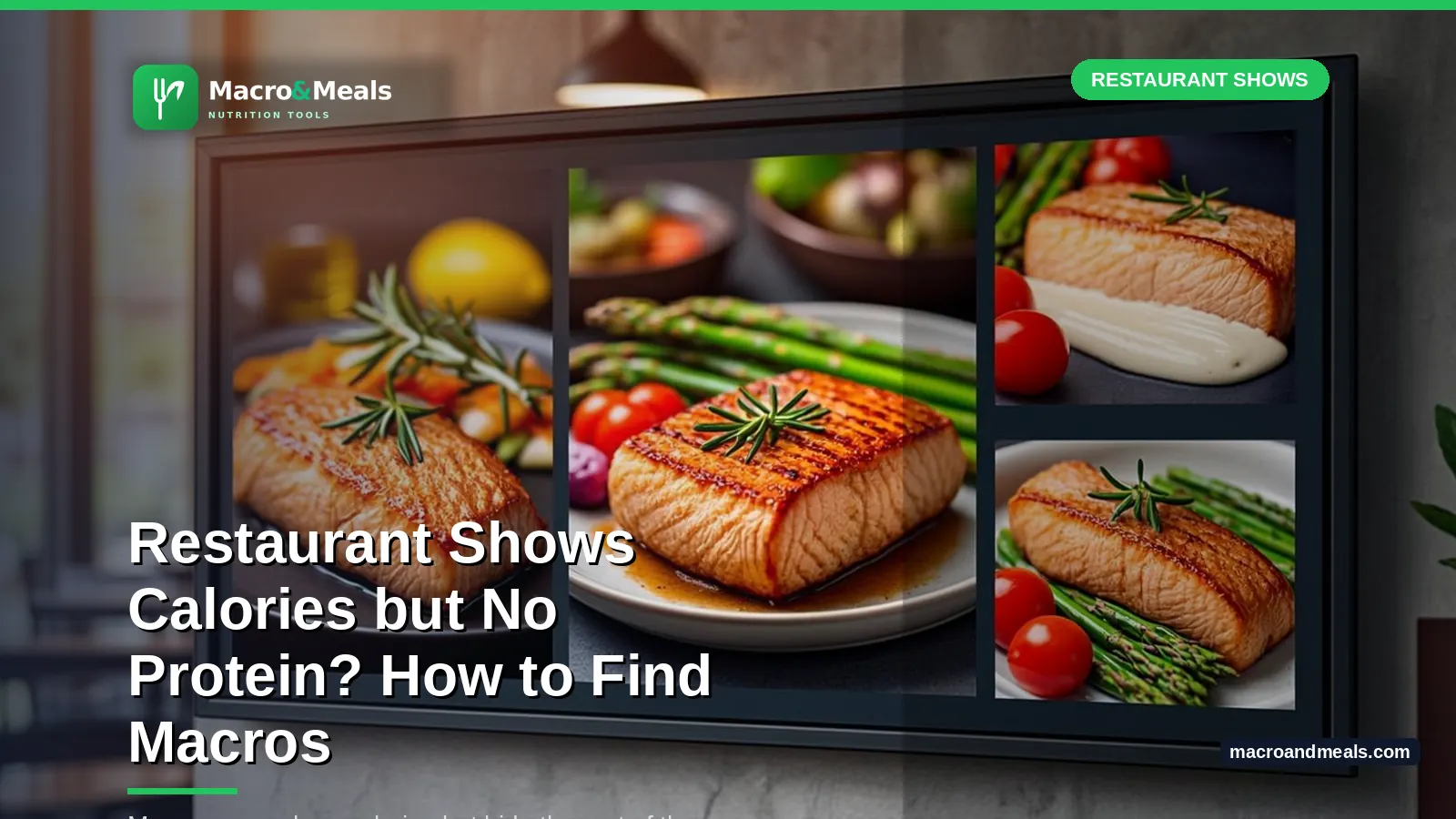
You can see 540 calories next to a restaurant meal and still have no idea how much protein it contains. That is not necessarily a mistake. US menu-labeling rules require covered chain establishments to display calories for standard menu items, while additional written information, including protein, must generally be available on request.
So the best first step is not to guess protein from the calorie count. It is to look for the restaurant's full nutrition guide or ask staff where its written nutrient information can be found.
1. What US rules actually require
Under the FDA's menu-labeling framework, covered establishments generally include chains with 20 or more locations operating under the same name and selling substantially the same menu items. For standard items, these businesses must display calorie information and provide additional written nutrition information on request.
That additional information includes protein, total carbohydrates, sugars, dietary fiber, total fat, saturated fat, trans fat, cholesterol, and sodium. The detailed rules have exceptions, so do not assume every independent restaurant or every daily special is covered.
The ability to request more information is especially useful when someone needs data for managing an established nutrition target. A menu board can be accurate about calories without being the complete nutrient record.
2. The best places to look, in order
First: The official restaurant website or app. Search the chain's nutrition page, ingredient guide, allergen guide, or menu item details. Confirm the item name, preparation, and country. A restaurant's US menu may not match its overseas menu.
Second: The restaurant's written nutrition information. Covered establishments must make it available on request for standard items. If the details are not posted, ask the staff or customer service team for them.
Third: The ordering experience. Builders sometimes break the meal into ingredients. A bowl made with one protein, rice, cheese, and sauce may have different totals after substitutions. Do not assume the standard menu number includes every add-on.
Fourth: A secondary food database. This may be useful when official information is unavailable, but check whether it cites a real primary source and the same version of the meal. Community-submitted nutrition entries can contain mistakes.
3. Why calories cannot reveal protein by themselves
Calories reflect energy from multiple nutrients. A food with 500 calories could get much of its energy from carbohydrate, fat, protein, or a mixture. Without a nutrient breakdown, there is no unique protein number you can calculate.
For a simple illustration, protein contributes roughly four calories per gram. That does not mean you can divide the entire menu item's calories by four to determine its protein. A 500-calorie item contains other nutrients too. Doing so would imply all 500 calories came from protein, which is almost never justified.
Guessing from the words "grilled," "healthy," or "protein-packed" is unreliable for the same reason. Portion size and ingredients matter far more than an appealing menu description.
4. A practical script for asking the restaurant
You can ask: "Do you have the complete written nutrition information for the standard chicken bowl, including protein and sodium? I can see calories on the menu but not the other nutrients."
If the order was customized, also ask which additions and substitutions are included. Some restaurant sources report standard combinations only. If the available data is incomplete, save the uncertainty rather than pretending you received a verified total.
5. When an estimate may be reasonable
If the restaurant cannot provide protein details, break the meal into observable components. Estimate using relevant database items that match the cooking method and approximate portion. A grilled chicken portion and a breaded fried cutlet should not be assigned the same nutrient entry just because both are called chicken.
Clearly label the result estimated. Added oils, sauces, moisture loss, and portion differences limit precision. For health conditions requiring precise nutrient restrictions, a rough internet estimate may not be suitable. Seek a clinician's or dietitian's guidance.
MacroAndMeals' restaurant nutrition directory can help you find brand-specific calculators, but verify the exact item and underlying nutrient records before relying on the result. The food calorie calculator can be used for manually approximating component foods.
6. What this means for tracking a whole week
One meal with uncertain protein does not require building a false exact number. Record the best-supported amount, label it as an estimate, and avoid converting a guess into an apparently sourced figure in your saved history. Repeated uncertainty is a good reason to choose restaurants with clearer data or prepare a similar meal at home occasionally, if that suits your routine.
7. Bottom line
A calories-only menu does not mean the restaurant has no protein information. Check the full official guide and ask for the written nutrients first. If you must estimate, be transparent about the assumptions and do not calculate protein from calories alone.
Sources
- FDA menu labeling requirements, including protein upon request: https://www.fda.gov/food/nutrition-food-labeling-and-critical-foods/menu-labeling-requirements
- FDA consumer guide to calories on menus: https://www.fda.gov/food/nutrition-education-resources-materials/calories-menu
- FDA overview of covered establishments and exceptions: https://www.fda.gov/food/nutrition-food-labeling-and-critical-foods/overview-fda-labeling-requirements-restaurants-similar-retail-food-establishments-and-vending
Before publication: Verify the exact internal restaurant-calculator URL. Have a knowledgeable reviewer confirm that the US regulatory summary retains its exceptions and is not presented as universal law.
Look Up Calories for Any Food
Search common foods and get instant calorie and macro totals.