Quick Summary
1. The short answer: Choose a meal format that makes vegetables practical.
2. Also covered: Can a fast food meal have both protein and fiber?
3. Also covered: An example with both numbers verified
4. Also covered: Why beans deserve a place in the conversation
Table of Contents
- 1. Can a fast food meal have both protein and fiber?
- 2. An example with both numbers verified
- 3. Why beans deserve a place in the conversation
- 4. Four restaurant strategies that are easier to use
- 5. What about Taco Bell and other chains?
- 6. If you're ordering for a group or on a busy day
- 7. How much fiber is enough in one meal?
- 8. A better research series for MacroAndMeals
- 9. The takeaway
1. Can a fast food meal have both protein and fiber?
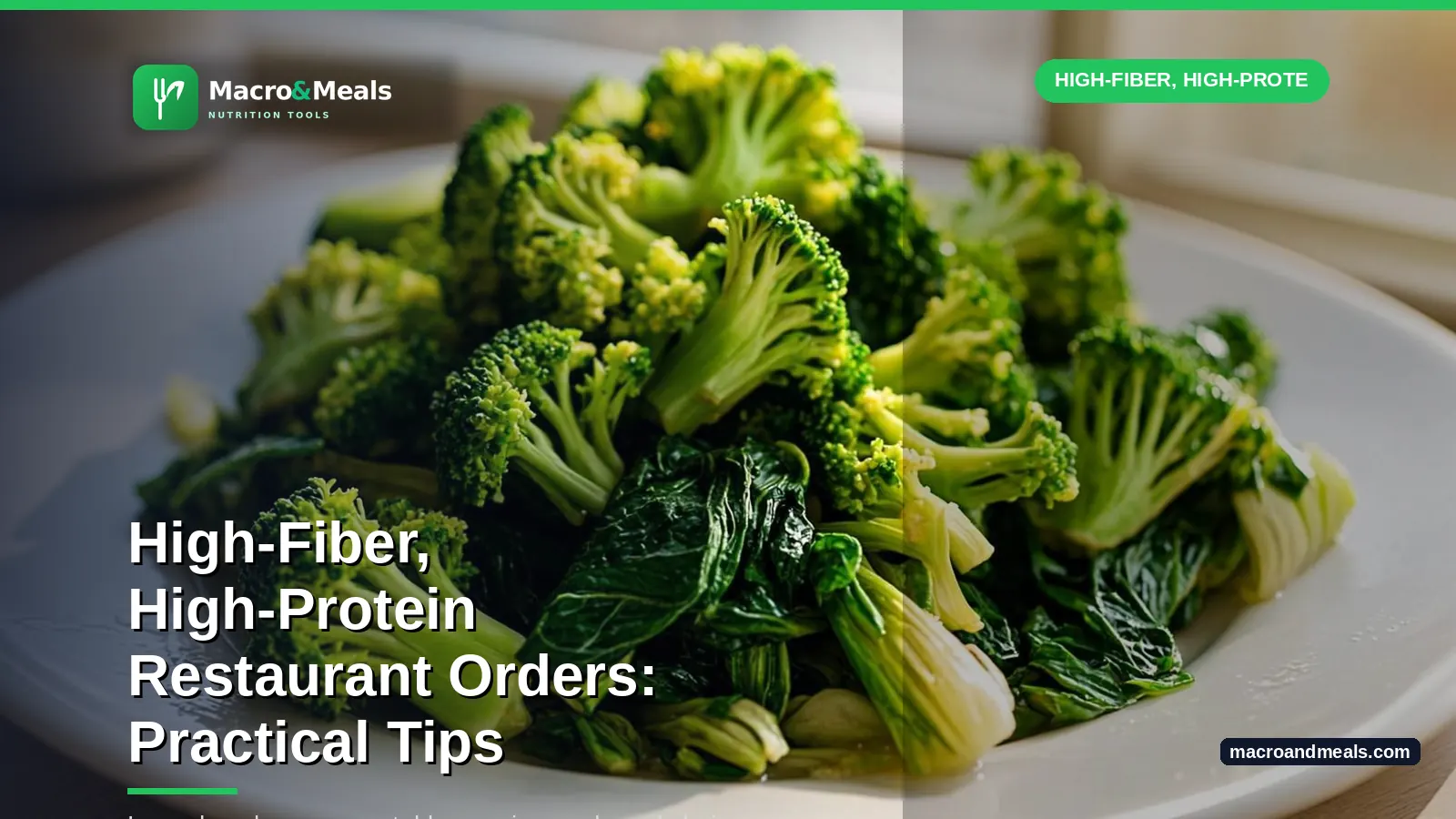
Yes. Some restaurant orders include protein-rich ingredients alongside beans, vegetables, and whole grains, providing both nutrients in one meal. The challenge is separating the full nutrition of a named order from a vague claim such as 'healthy bowl' or 'protein-packed.'
One reliable example comes from Chipotle's own high-protein menu. Its High Protein-High Fiber Bowl is listed at 540 calories, 46 grams of protein, and 14 grams of fiber in the official product announcement. That is useful because the restaurant published all three figures for the same defined bowl.
2. An example with both numbers verified
Chipotle describes the High Protein-High Fiber Bowl as containing adobo chicken, light brown rice, black beans, fajita vegetables, roasted chili-corn salsa, fresh tomato salsa, and romaine lettuce. For comparison, its Double High Protein Bowl contains double chicken, light white rice, beans, vegetables, cheese, salsa, and extra lettuce.
| Official preset | Calories | Protein | Fiber |
|---|---|---|---|
| High Protein-High Fiber Bowl | 540 | 46 g | 14 g |
| Double High Protein Bowl | 760 | 81 g | 11 g |
| High Protein-Low Calorie Salad | 470 | 36 g | 10 g |
Source: Chipotle's December 2025 announcement. Verify menu availability and any 2026 recipe updates at publication.
The double-chicken option offers more total protein but less listed fiber than the named fiber-focused bowl. That does not mean one is better for everyone. It means readers need to see the trade-off rather than following a single label.
3. Why beans deserve a place in the conversation
Beans can contribute dietary fiber along with some plant-based protein. They are a natural ingredient to check when building a restaurant bowl, burrito, chili, or side. If a chain lists black beans or pinto beans as customizable options, open its current nutrition tool and see what those additions change.
Do not calculate the entire order by copying a generic half-cup bean figure from a database. Restaurants may use a different portion, seasoning, cooking method, or recipe. A brand's own nutrition information is the first source for that brand's menu item.
If the menu offers beans but does not show the full order's fiber, you can describe the ingredient choice without claiming a precisely verified fiber total.
4. Four restaurant strategies that are easier to use
Choose a meal format that makes vegetables practical. Bowls, salads with protein, and some wraps can provide a place for beans and vegetables without requiring a separate side. The final nutrient profile still depends on the actual build.
Keep the protein source visible. If you are interested in protein, record the grams for the complete meal. A restaurant's promotion might emphasize protein even when the serving size or toppings have changed.
Compare sauces and extras honestly. Salsa, dressings, oils, cheese, rice, guacamole, and chips may all change the totals. Do not declare a meal 'low calorie' because it contains vegetables without checking the rest.
Look beyond a single number. Fiber and protein matter, but sodium, saturated fat, calories, preferences, and allergies can also inform your decision.
5. What about Taco Bell and other chains?
A Taco Bell Cantina Chicken Bowl includes black beans, rice, chicken, and vegetables. Official location pages describe it as providing 25 grams of protein, but the retrieved official pages differed in their calorie listings. They did not expose a fully verified, comparable fiber figure in the same results. That means it can be mentioned as a candidate for further research but should not be ranked against the Chipotle bowl as though all nutrients were confirmed.
A complete cross-chain chart needs comparable serving sizes, current nutrition records, precise market coverage, and a date. When information is missing, leave the cell blank or explicitly label it as unavailable. Do not fill gaps using fabricated estimates.
6. If you're ordering for a group or on a busy day
You may not have time to study a long nutrition table. Start with one meaningful change, such as adding beans to a meal you already enjoy, choosing an available vegetable option, or keeping the side that fits the rest of your day. The point is to make restaurant nutrition easier to understand, not to create a test you can fail.
For a personalized Chipotle build, the MacroAndMeals Chipotle nutrition calculator can be used as a comparison tool after its data is checked against the current official menu. Save the actual order instead of estimating ingredients from a photo.
7. How much fiber is enough in one meal?
There is not one universal restaurant-meal requirement. Overall dietary fiber needs vary, and the relevance of a specific meal depends on the wider diet and individual circumstances. The NIH notes that different fiber types and amounts may be associated with different effects. People increasing their fiber intake may also want to make changes gradually according to their tolerance.
Avoid interpreting a single restaurant number as a medical recommendation, especially if someone has a health condition that changes dietary needs. Qualified dietitians can provide individualized guidance when needed.
8. A better research series for MacroAndMeals
Build a first-party comparison set with a fixed date and one consistent US market. For each major chain, verify a standard order that supplies both protein and fiber, then collect calories, protein, fiber, sodium, serving details, and ingredient notes. Where data is not supplied, mark that explicitly. Photograph only orders actually purchased and documented by the editorial team.
This produces a more credible and useful resource than a list of speculative 'top 20 healthiest fast food orders.' It can also be updated when chains change menus.
9. The takeaway
You do not have to choose between protein and fiber when eating out. Look for complete meals that combine useful protein sources with beans, vegetables, or other fiber-containing foods, then check the actual menu numbers. Chipotle offers a documented example; other chains need the same verification before anyone can fairly compare them.
Sources
- Chipotle: Official High Protein Menu and preset nutrition.
- Taco Bell: Cantina Chicken Bowl store listing.
- NIH: Health Benefits of Dietary Fibers Vary.
Check Chipotle Nutrition First
Use the free Chipotle calculator to build your order and see the totals before you go.