Quick Summary
1. The short answer: Simple worksheet for two real test bowls:
2. Also covered: Is bean salad higher in protein and fiber than green salad?
3. Also covered: Compare meals, not just labels
4. Also covered: Why beans make a difference
Table of Contents
- 1. Is bean salad higher in protein and fiber than green salad?
- 2. Compare meals, not just labels
- 3. Why beans make a difference
- 4. What happens when dressing changes?
- 5. Two practical ways to build a satisfying salad
- 6. Does one salad keep you full longer?
- 7. How to find the actual macros
- 8. The bottom line
1. Is bean salad higher in protein and fiber than green salad?
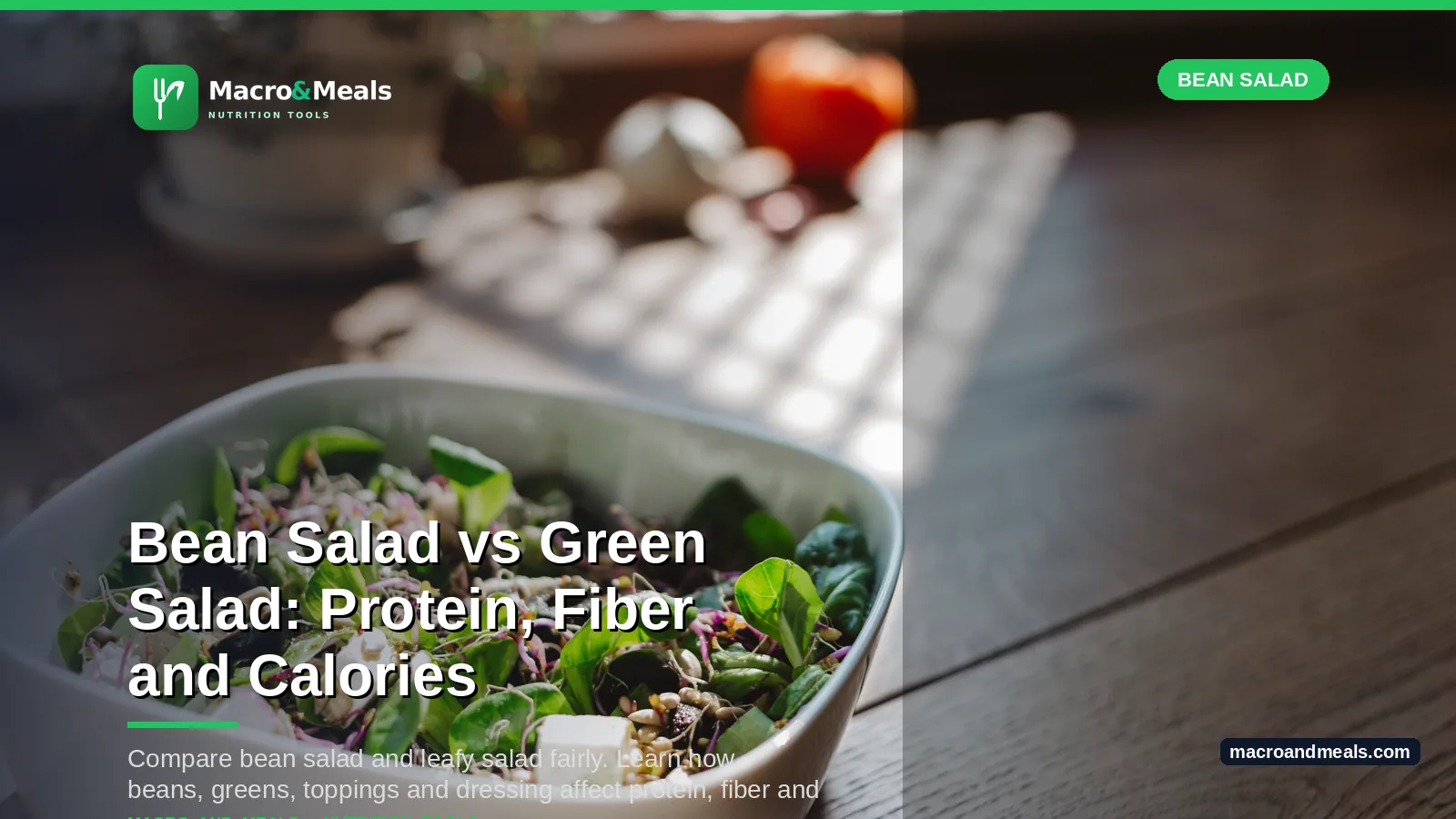
A bean-based salad often contains more protein and fiber from its main ingredients than a bowl built mostly from leafy greens, but the actual nutrition depends on what else goes in. An all-bean salad dressed with oil is very different from a small bean topping over vegetables. A green salad with chicken, chickpeas and seeds may contain more protein than a plain bean salad. Serving sizes can make the comparison unfair before you even look at the numbers.
The useful question is: What does each finished bowl provide in the portion you will actually eat? That means counting the beans, greens, vegetables, dressing and optional protein ingredients in both dishes.
2. Compare meals, not just labels
"Bean salad" might describe chickpeas, black beans and lentils with chopped vegetables, or beans coated in an oil-based dressing. "Green salad" might mean a handful of lettuce with cucumber, or a full meal with eggs, chicken or tofu. Those dishes do not have standard nutrition profiles.
Try this comparison checklist before you make a decision:
| Component | Bean-focused salad | Leafy-green-focused salad |
|---|---|---|
| Main base | Beans, lentils or chickpeas | Lettuce, spinach or mixed greens |
| Main protein sources | Beans and any added protein | Any added protein such as eggs, tofu or poultry |
| Main fiber sources | Beans plus vegetables | Vegetables, beans, seeds or grains if included |
| Calorie-sensitive extras | Oil, cheese, nuts, dressings | Oil, croutons, cheese, nuts, dressings |
| Preparation variable | Cooked and drained bean weight | Raw greens shrink considerably when packed |
This is a directional ingredient comparison. It is not a completed laboratory analysis or a nutrient table for two finished recipes.
3. Why beans make a difference
USDA MyPlate places beans, peas and lentils in a unique position: they can count as foods in the vegetable group or protein foods group because they offer nutrients associated with both. That helps explain why someone interested in protein and fiber might find bean-based meals appealing.
But more protein does not automatically mean a meal fits every purpose. Portion size, other toppings and the rest of your eating pattern still matter. If you want a lighter side salad alongside a substantial entrée, a simple bowl of greens may do that job perfectly well.
4. What happens when dressing changes?
Dressing is a major reason two salads with similar visible ingredients can have different calorie totals. Lemon juice and vinegar are not nutritionally interchangeable with a generous amount of oil or a creamy bottled dressing. A few extra spoonfuls may affect the energy total enough to change the comparison.
Instead of skipping dressing just to minimize calories, measure what you actually like and include it in the calculation. Flavor matters. A salad you genuinely enjoy is more useful than an idealized recipe you do not want to eat.
Simple worksheet for two real test bowls:
| Measurement | Bean salad test | Green salad test |
|---|---|---|
| Finished edible serving weight | Record grams | Record grams |
| Cooked beans | Record grams | Record grams, if any |
| Leafy greens | Record grams | Record grams |
| Added protein | Record type and grams | Record type and grams |
| Oil or dressing | Record type and grams | Record type and grams |
| Calories, protein and fiber | Calculate from verified entries | Calculate from verified entries |
Do not fill missing cells with a guess. If one bowl weighs 350 grams and the other 150 grams, say whether you are comparing equal-weight servings or real meal portions. Both analyses can be useful, but they answer different questions.
5. Two practical ways to build a satisfying salad
Bean-forward bowl
Start with cooked and drained beans of your choice, add chopped vegetables such as cucumber and peppers, season with lemon and herbs, then add a measured dressing. You can include another protein source if that is what your meal needs. Make enough to portion into containers after the final ingredients have been weighed. Be cautious with storage, especially when meals include perishable dairy, meat or seafood.
Leafy-forward bowl
Start with washed greens, then add vegetables, a source of protein and a dressing you enjoy. Beans can work as a topping here too. The important distinction is that your base is mostly leaves, not that the meal must avoid legumes.
Neither method has a fixed macro number until ingredients and portions are established. The purpose is to show how flexible the two formats are without presenting imaginary precision.
6. Does one salad keep you full longer?
There is no universal answer that can be guaranteed from the name of a meal. Protein, fiber, fat, total portion size and personal preferences can all shape how someone experiences a meal. If a leafy salad leaves you wanting more, you could add a protein source or beans. If a large bean salad feels too heavy for a side, make a smaller serving and pair it with something else.
Don't force the comparison into a winner and loser. Look at the whole eating occasion: lunch, side dish, meal prep or snack. Your goal should decide what an appropriate serving looks like.
7. How to find the actual macros
When preparing a specific recipe, weigh cooked ingredients in their edible state and enter each one into the MacroAndMeals recipe nutrition calculator. Match the data entry to the ingredient's actual form. Raw lentils and cooked lentils, for example, should not share the same weight-based values. Check ingredients using USDA FoodData Central or the exact product label.
Record the finished yield if you are making multiple servings. If the salad makes four containers, divide the complete batch nutrients by four only when the portions are truly equal or weigh them individually.
8. The bottom line
Beans naturally provide a useful combination of plant protein and fiber, while leafy salads are flexible bases for many vegetables and other ingredients. The real nutrition winner depends on the whole recipe and serving size. A trustworthy comparison uses weighed ingredients and includes dressings, rather than relying on a headline about which salad is "healthier."
Sources
- USDA MyPlate: Vegetables, Beans, Peas and Lentils.
- USDA MyPlate: Protein Foods.
- USDA FoodData Central.
- Whole Foods Market: 2027 Bean Trend.
Calculate Nutrition for Any Recipe
Break down your own recipe into calories, protein, carbs and fat per serving.