Quick Summary
1. The short answer: The biggest nutrition differences often come from the beef portion and fat content, the rice or potato base, sauces, cheese and added oils.
2. Also covered: What makes the three bowls different?
3. Also covered: 1. Hot honey beef bowl
4. Also covered: 2. Burger bowl with crunchy potatoes
Table of Contents
- 1. What makes the three bowls different?
- 2. 1. Hot honey beef bowl
- 3. 2. Burger bowl with crunchy potatoes
- 4. 3. Ginger garlic beef and rice bowl
- 5. So which beef bowl has the most protein?
- 6. Which ingredients change calories the most?
- 7. How to publish an accurate side-by-side macro table
- 8. Food safety is part of a usable recipe
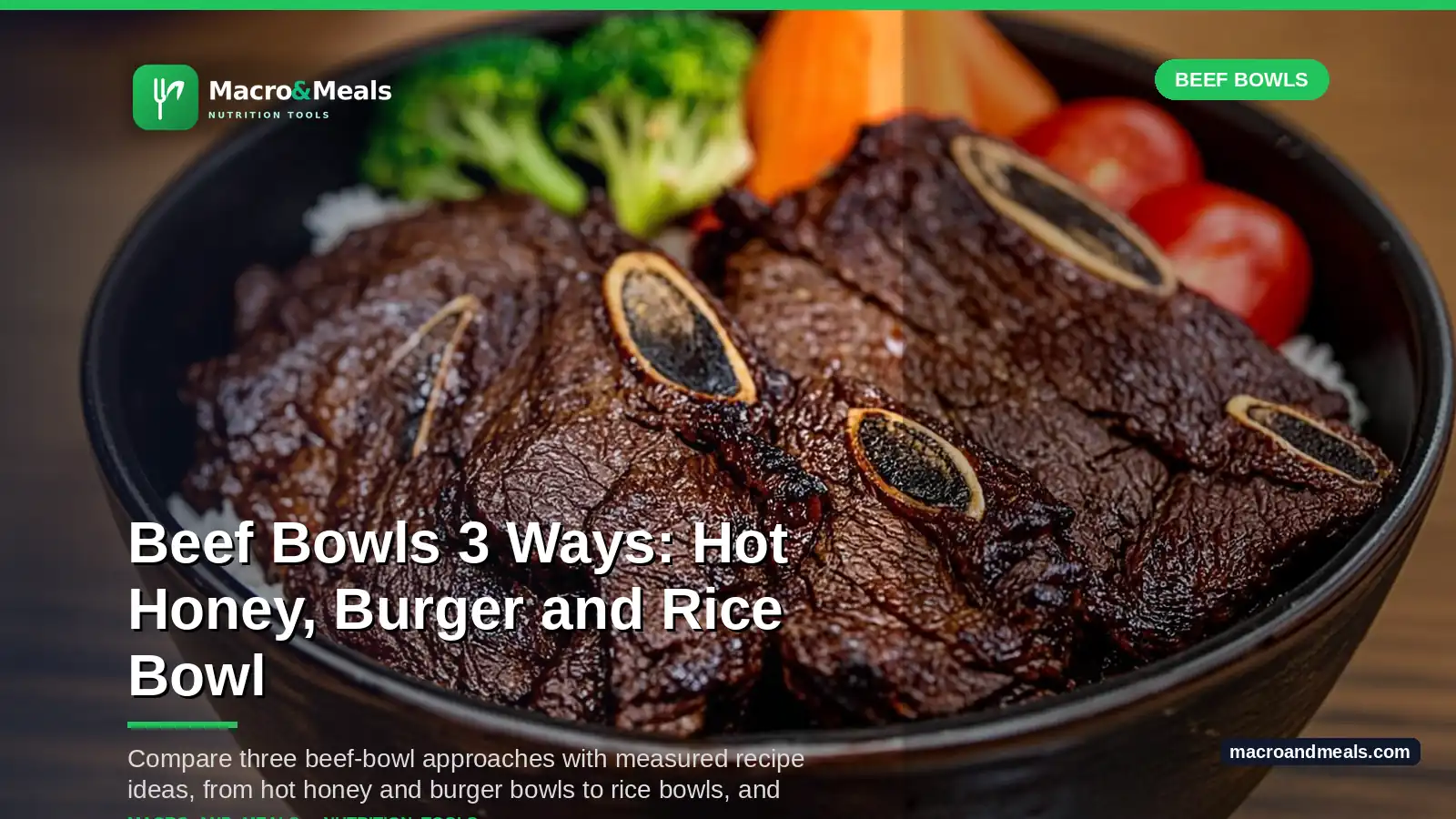
You have probably seen bowls built around hot honey beef, burger-style toppings or rice and vegetables. They look similar in photos, but what goes into the bowl can be quite different.
The biggest nutrition differences often come from the beef portion and fat content, the rice or potato base, sauces, cheese and added oils. Before you copy a macro number from a short video, check whether it reflects the recipe you plan to make.
Pinterest's October 2026 creator trends page highlights high-protein bowls, including hot honey beef bowls and burger bowls. That explains why these are timely formats to explore, but it does not verify the protein or calories in any particular recipe. [1]
The three versions below are original formulations for cooking and nutrition testing. No finished macro totals are claimed.
1. What makes the three bowls different?
| Bowl | Main base | Characteristic toppings | What most needs measuring |
|---|---|---|---|
| Hot honey beef | Roasted sweet potato | Beef, cottage cheese, hot honey | Sweet potato, beef fat level, honey and oil |
| Burger bowl | Lettuce, tomato and potato | Ground beef, cheese, pickles, sauce | Beef portion, cheese, potatoes and sauce |
| Ginger garlic rice bowl | Cooked rice and vegetables | Ground beef, cucumber, ginger and soy | Cooked rice, beef, oil and sauce |
A “protein bowl” is not a standardized nutrition category. Two recipes can share a name and still have very different serving sizes.
2. 1. Hot honey beef bowl
Proposed ingredients for two servings: 300 g raw lean ground beef; 400 g peeled sweet potato, cubed; 10 g olive oil; 140 g plain cottage cheese; 25 g hot honey; 100 g diced cucumber; 60 g mixed greens; smoked paprika, garlic powder and black pepper to taste.
Draft method: Toss the sweet potato with the oil and seasonings, then roast it on a baking tray until tender and browned. Cook the ground beef in a separate skillet, breaking it apart until a food thermometer reads 160°F at the center. [2] Divide the cooked ingredients between two bowls. Add cottage cheese, cucumber and greens; drizzle each measured share of hot honey over the top.
Why it works as a concept: Sweet potato gives the bowl a soft base, beef provides savory contrast, and hot honey adds sweet heat. Cottage cheese introduces a creamy element. Measure the honey rather than relying on what looks like a modest drizzle in a video.
What to test: Whether the sauce amount tastes balanced, whether a given cut of beef releases significant fat during cooking, the final sweet potato weight and the actual serving yield.
3. 2. Burger bowl with crunchy potatoes
Proposed ingredients for two servings: 300 g raw lean ground beef; 350 g potatoes; 10 g oil; 160 g chopped romaine; 120 g tomatoes; 80 g diced pickles; 50 g shredded cheddar; 40 g mayonnaise-based burger sauce, weighed from the actual brand; pepper and garlic to taste.
Draft method: Cut the potatoes into bite-sized pieces, toss with oil and roast until tender and browned. Cook the beef thoroughly to 160°F. Divide the romaine and tomatoes between two bowls. Add the beef, potatoes, pickles and cheese, then portion the sauce instead of pouring from the bottle without measuring.
Why it works as a concept: It keeps familiar burger flavors while making the components visible. Readers can choose which elements matter most to their enjoyment, whether that is the beef, melted cheese, crunchy potato or tangy sauce.
What to test: Sauce quantity, food safety after mixing hot beef with cold lettuce, whether the cheese melts as intended and the cooked yield of beef and potatoes.
4. 3. Ginger garlic beef and rice bowl
Proposed ingredients for two servings: 300 g raw lean ground beef; 320 g cooked rice; 180 g broccoli; 100 g sliced cucumber; 12 g cooking oil; 30 g reduced-sodium soy sauce; 15 g rice vinegar; 10 g ginger; 10 g minced garlic; scallions and chili flakes to taste.
Draft method: Prepare the rice and keep it hot or refrigerate it promptly if cooked ahead. Steam the broccoli until tender. Cook ground beef with ginger and garlic, checking the meat reaches 160°F. Add soy sauce and vinegar, heat briefly, and assemble bowls with weighed portions of cooked rice, broccoli, beef and fresh cucumber.
Why it works as a concept: This version uses grains and vegetables as a straightforward base, with soy, vinegar and ginger providing most of the flavor. The nutrition will depend heavily on the cooked rice portion and whether the beef is drained after cooking.
What to test: Correct cooked rice weight and moisture, the sauce balance and whether any remaining cooking oil or rendered fat is consumed.
5. So which beef bowl has the most protein?
We cannot honestly give that ranking before the complete ingredient record has been nutrient-checked. Each proposed version starts with the same raw mass of ground beef, but their toppings differ. Cottage cheese and cheddar, for example, may add protein as well as other nutrients.
Using the same starting beef weight does not guarantee identical total protein, because the complete meal includes more than the beef. The choice of beef fat percentage also changes the balance of energy and fat. A trustworthy comparison must specify the exact beef product and the serving size used for each bowl.
6. Which ingredients change calories the most?
For these particular proposed bowls, look closely at cooking oil, fatty sauces, cheese, honey and starch portions. That does not mean any of those foods are undesirable. It means they should be measured when you want a reliable comparison.
A social-media recipe that omits the oil used to roast potatoes or the mayo mixed into sauce may show a number that does not reflect the cooked food. If the video says “one serving,” ask whether it means one bowl or the entire recipe.
7. How to publish an accurate side-by-side macro table
We recommend recording the actual brand and raw weight of beef, the cooked rice or potato weight, every oil and sauce and the finished edible batch weight. Calculate full ingredient totals from source-matched nutrition entries. Only then divide by the number of servings actually produced.
| Completed bowl | Calories per served portion | Protein | Carbs | Fat | Fiber |
|---|---|---|---|---|---|
| Hot honey beef | Awaiting kitchen and nutrition test | Awaiting test | Awaiting test | Awaiting test | Awaiting test |
| Burger bowl | Awaiting kitchen and nutrition test | Awaiting test | Awaiting test | Awaiting test | Awaiting test |
| Ginger garlic rice bowl | Awaiting kitchen and nutrition test | Awaiting test | Awaiting test | Awaiting test | Awaiting test |
This visible draft table is a reminder of a publication requirement, not an acceptable final consumer comparison. Remove placeholders before publishing. Use the MacroAndMeals recipe nutrition calculator after confirming the ingredient entries and portion methodology.
8. Food safety is part of a usable recipe
USDA advises cooking ground beef to an internal temperature of 160°F, measured with a food thermometer. [2] Do not judge safety by color alone. Refrigerate perishable leftovers promptly, and use most refrigerated cooked leftovers within three to four days. [3] When reheating, follow safe food handling guidance.
Bottom line: The best beef bowl depends on what you want from it. Hot honey brings sweet heat, burger bowls emphasize familiar toppings, and rice bowls make grain portions easy to see. For macro comparisons, measure the complete bowl instead of trusting a viral number detached from a reproducible recipe.
Sources
[1] Pinterest Creator Trends, High-Protein Bowls, accessed October 19, 2026.
[2] USDA FSIS, Ground Beef and Food Safety.
[3] USDA FSIS, Keep Food Safe.
Calculate Nutrition for Any Recipe
Break down your own recipe into calories, protein, carbs and fat per serving.