Quick Summary
1. The short answer:
2. Also covered: How much protein is in brothy butter beans?
3. Also covered: Why is everyone talking about butter beans?
4. Also covered: A development formula for a brothy bean bowl
Table of Contents
- 1. How much protein is in brothy butter beans?
- 2. Why is everyone talking about butter beans?
- 3. A development formula for a brothy bean bowl
- 4. Why do finished bowl calories vary so much?
- 5. Are butter beans a good protein food?
- 6. What about canned butter beans?
- 7. How to calculate the final recipe honestly
- 8. Bottom line
1. How much protein is in brothy butter beans?
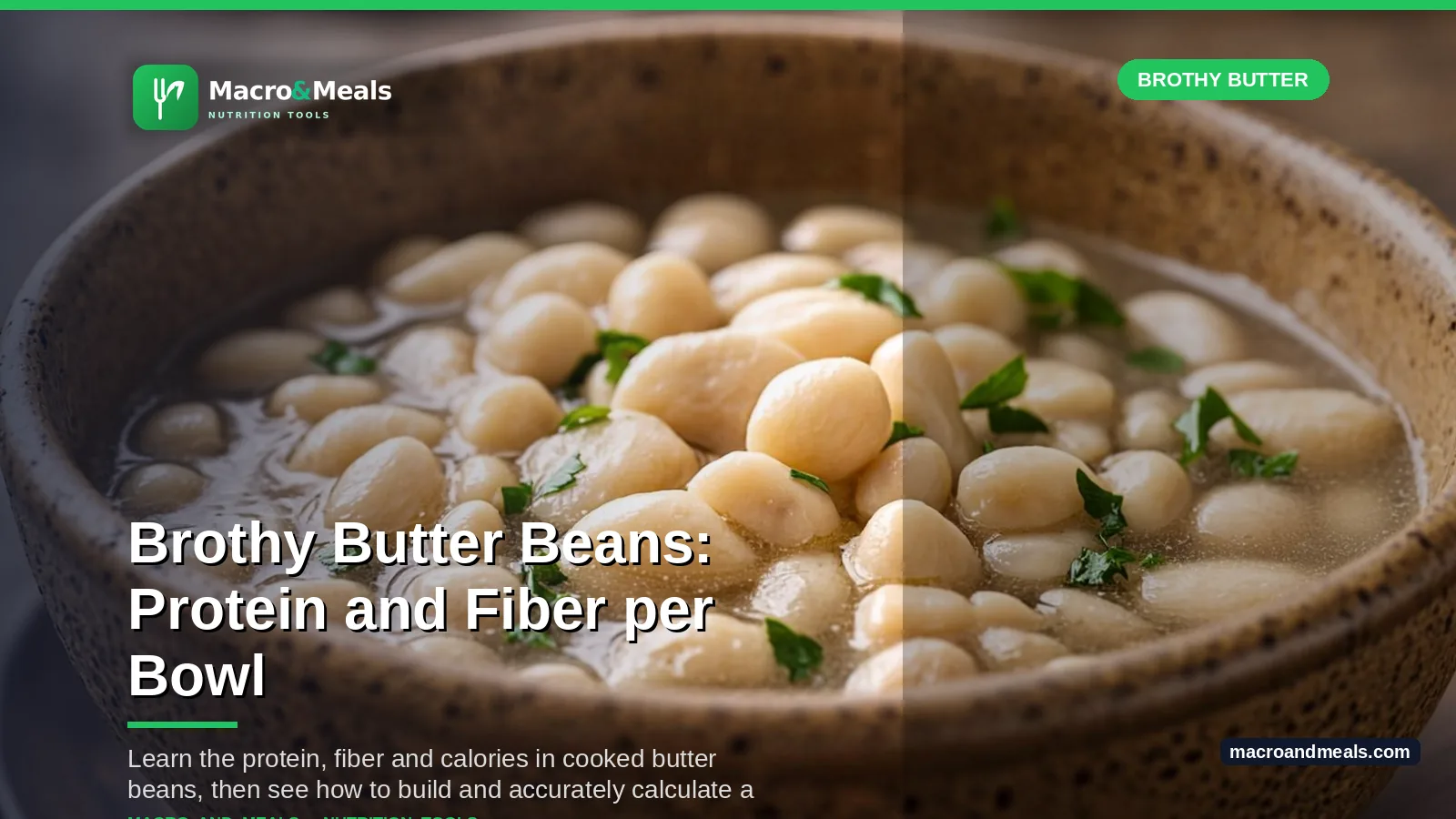
It depends on which beans and how many you serve. For one concrete reference, USDA FoodData Central's entry for large mature lima beans, cooked and boiled without salt, lists 115 calories, 7.8 grams of protein and 7 grams of fiber per 100 grams. Large lima beans are one type of bean often sold under the butter bean name. A branded can may use a different cultivar or preparation, so its label can differ.
If a bowl contains 200 grams of these cooked beans, the bean component alone provides approximately 230 calories, 15.6 grams of protein and 14 grams of fiber. That is transparent arithmetic from the USDA reference, not a measured total for a finished recipe with oil, stock, bread and garnishes.
| Cooked large lima beans | Calories | Protein | Fiber |
|---|---|---|---|
| 100 g | 115 | 7.8 g | 7 g |
| 150 g | 173 | 11.7 g | 10.5 g |
| 200 g | 230 | 15.6 g | 14 g |
| 250 g | 288 | 19.5 g | 17.5 g |
The larger portions are calculated directly from the same USDA food state. Energy is rounded to the nearest whole calorie.
2. Why is everyone talking about butter beans?
Whole Foods Market's October 2026 forecast for 2027 identifies brothy butter beans, crispy chickpeas, lentil bowls and beans on toast within its emerging “Bean Boom.” The prediction points toward familiar legumes becoming the main event rather than a small side dish. That's an interesting cultural signal, but a trend forecast does not prove that every bean video is popular or that a recipe has been tested.
The practical reason brothy beans appeal to home cooks is simpler than a trend label: they can turn pantry ingredients into a warm bowl with a tender texture and plenty of room for herbs, vegetables and personal preferences. They can also be made in a large batch, though cooking and storage methods should be tested for any recipe you publish.
3. A development formula for a brothy bean bowl
This is a recipe-development starting point, not a tested kitchen recipe or a validated full nutrition label. For two generous servings, consider the following:
- 400 grams of cooked, drained butter beans, weighed after cooking or draining
- Unsalted or reduced-sodium vegetable stock, enough to make the consistency you prefer
- Onion and garlic to taste
- A measured amount of olive oil for cooking
- A handful of spinach or another leafy green
- Lemon juice, parsley, pepper and optional chili flakes
Warm the oil in a suitable saucepan, soften the aromatics, and add the beans with enough broth for a spoonable stew. Simmer gently until heated through, then fold in the greens and finish with lemon and herbs. Exact cooking time, liquid quantity and seasoning must be confirmed in a real kitchen test, including whether the texture is pleasant after reheating.
The essential nutrition step is to weigh the beans and record the oil. If you are preparing two servings, don't simply call each serving “one can” unless the can's drained weight supports that assumption.
4. Why do finished bowl calories vary so much?
Beans themselves have a calculable contribution, but the additions can move the total. Olive oil is energy-dense, and the amount actually used matters. Bread, cheese, sausage, pesto or other toppings introduce their own nutrients. Broth can contribute substantial sodium even if its calories are modest.
A good recipe calculator should keep those components separate. If the beans provide 230 calories in your serving and you add an oily dressing, the finished bowl will exceed 230 calories. But without a specified oil amount and the current nutrient entry, we should not invent a final total.
Avoid a common misleading shortcut: using a label for dried raw butter beans against the weight of cooked beans. Water absorption changes the weight. The correct comparison uses the food state in the database that matches how you weighed the portion.
5. Are butter beans a good protein food?
They're a useful source of plant protein and fiber together. However, “high-protein meal” is not a fixed description that follows every bowl. If a finished dinner contains only a small spoonful of beans and mostly broth, its protein may be low. A generous bean portion makes a different contribution.
If you want more protein without replacing the beans, you can consider additions that suit your diet, such as yogurt-based toppings, tofu or a separate protein accompaniment. Each choice should be calculated from its own portion rather than presented as an automatic improvement. A meal can also be enjoyable without maximizing a single nutrient.
6. What about canned butter beans?
Canned beans are convenient, but labels can differ in serving size, salt and drained weight. Two cans with similar-looking packaging may not contain identical amounts of beans. One may be packed in salted liquid, another in water, and a flavored tin may contain oil or sauce.
Drain and weigh the beans if you want to use the cooked-bean reference. If the specific product has a reliable label that includes the canned preparation, use the package nutrition for the edible amount instead. Rinsing may remove some surface sodium, but do not promise a specific sodium reduction without supporting data for that product.
7. How to calculate the final recipe honestly
In the MacroAndMeals Recipe Nutrition Calculator, enter the total drained cooked bean weight, all measured cooking fats, vegetables, broth and toppings. Define the number of servings after the recipe is prepared. Record the total cooked yield by weight if you want people to reproduce a serving in grams.
For a transparent worked example, 400 grams of the USDA cooked large lima bean entry contribute about 460 calories, 31.2 grams of protein and 28 grams of fiber to the entire pot before stock, vegetables or oil. If the pot is divided equally into two servings, the bean contribution is half of those amounts. The complete recipe needs a separate calculation.
8. Bottom line
For the specified USDA cooked large lima bean entry, 200 grams provide about 230 calories, 15.6 grams of protein and 14 grams of fiber. Brothy beans can be a practical meal foundation, but the final bowl depends on bean type, drained weight, broth, oil and accompaniments. The proposed recipe must be kitchen-tested before being published as a tested MacroAndMeals recipe.
Sources
- USDA FoodData Central search, reference FDC 174253
- USDA-sourced cooked large lima bean record, FDC 174253
- Whole Foods Market 2027 trend predictions
Calculate Nutrition for Any Recipe
Break down your own recipe into calories, protein, carbs and fat per serving.