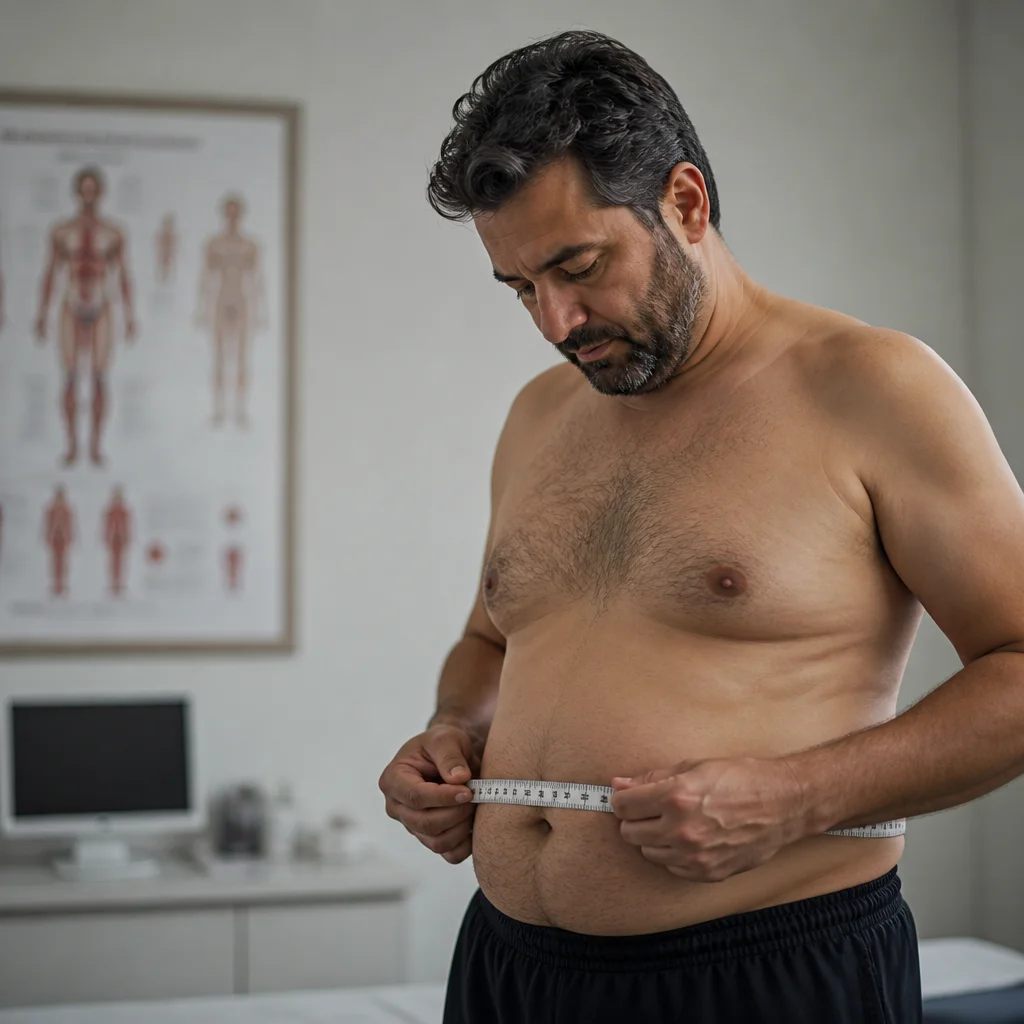
Quick Summary: Waistline, Hormones, and Health
1. Core Concept: Visceral belly fat acts as an active endocrine organ, generating aromatase that converts circulating testosterone into estrogens.
2. Clinical Evidence: Narrow penile arteries demonstrate vascular restriction before coronary vessels, making erectile changes an early cardiovascular indicator.
3. Actionable Step: Monitor waist circumference monthly at the navel; measurements over 94 cm signal rising risk, while 102 cm marks high risk.
4. Long-Term Strategy: Target 1.6 grams of protein per kilogram, walk 7,000 to 10,000 daily steps, and evaluate baseline metabolic blood panels.
Most men notice the belt notch before they notice anything else. The trousers feel uncomfortably tight, the morning stairs seem steeper, and somewhere along the way, daily energy, mood, and libido quietly slide. It is easy to dismiss all of that as normal aging. Much of it, however, is driven by metabolic shifts, and it is far more modifiable than the average 45-year-old assumes.
This is not a motivational lecture about willpower. It is a practical clinical examination of what surplus abdominal fat actually does inside the male body, which symptoms deserve a physician's evaluation rather than another supplement bottle, and how to structure a sustainable nutritional plan that survives contact with real life, including restaurants, business dinners, and late work shifts.
Table of Contents
- 1. Belly Fat Behaves Like an Organ, Not Just Storage
- 2. Sleep Apnea: The Missing Piece
- 3. Erectile Dysfunction Is a Vascular Symptom First
- 4. Weight, Smoking, and Cancer Risk in Men
- 5. Where to Get Answers You Can Trust
- 6. A Food Plan Built for Men Who Eat Out
- 7. Training That Respects Your Joints
- 8. The First Three Appointments to Make
- 9. Frequently Asked Questions
1. Belly Fat Behaves Like an Organ, Not Just Storage
Visceral fat, the deep adipose tissue packed around your liver, pancreas, and intestines, is metabolically active tissue. Unlike subcutaneous fat sitting directly under the skin, visceral fat continuously releases inflammatory cytokines and expresses an enzyme called aromatase.
Aromatase converts testosterone into estradiol (estrogen). The greater the volume of visceral fat a man carries, the more of his endogenous testosterone gets converted, driving free testosterone lower. Diminished testosterone makes it progressively easier to deposit body fat and harder to retain lean muscle, which in turn fuels further aromatase activity. That self-reinforcing loop is why weight gain in men frequently arrives hand-in-hand with afternoon fatigue, reduced morning erections, lower drive, and fragmented sleep.
Waist measurement is a vastly superior screening metric compared to standard bathroom scales. A tape measure at navel level reveals far more about visceral fat distribution than body weight alone, because two men of identical scale weight can harbor radically different volumes of visceral fat. Established clinical guidance for men identifies a waist circumference around 94 cm (37 inches) as the threshold where metabolic risk begins climbing, and 102 cm (40 inches) as the high-risk mark. You can track your proportion using our dedicated Waist-to-Hip Ratio Calculator to contextualize your body fat distribution.
2. Sleep Apnea: The Missing Piece
Men who snore loudly, wake up feeling unrefreshed, and nod off during afternoon meetings often suffer from obstructive sleep apnea (OSA). Sleep apnea is strongly correlated with excess neck and visceral adiposity, and nocturnal hypoxia independently suppresses endogenous testosterone production while spiking morning cortisol.
In my clinical practice, identifying and treating sleep apnea with continuous positive airway pressure (CPAP) or oral appliances frequently restores daylight energy, stabilizes blood pressure, and revives libido more effectively than any dietary adjustment alone. If a sleep partner observes pauses in your breathing, choking sounds, or severe gasping at night, that warrants an immediate discussion with a sleep specialist or primary care physician.
3. Erectile Dysfunction Is a Vascular Symptom First
An erection is primarily a hydraulic vascular event reliant upon healthy endothelial lining, intact smooth muscle reactivity, and robust nitric oxide signaling. The cavernosal arteries feeding the penis measure approximately 1 to 2 millimeters in internal diameter, whereas the coronary arteries are roughly 3 to 4 millimeters.
Because of this size differential, systemic endothelial dysfunction and atherosclerotic plaque often restrict penile microcirculation years before coronary blood flow is noticeably impaired. For this reason, new-onset erectile difficulties in men during their forties or fifties should be viewed by clinicians as an early cardiovascular check-engine light: a critical prompt to evaluate resting blood pressure, fasting lipid panels, HbA1c, and waist circumference, rather than simply issuing a quick lifestyle prescription.
The same clinical logic applies in reverse. Men who are already managing established cardiovascular conditions, ranging from chronic hypertension to structural valvular disorders such as heart valve disease, should openly discuss changes in sexual function and physical exertion tolerance during follow-up reviews. Both markers provide valuable clinical feedback regarding systemic circulation and potential medication side effects. Hesitation and embarrassment are the primary reasons these symptoms go unmentioned, costing men valuable years of early preventive intervention.
4. Weight, Smoking, and Cancer Risk in Men
Carrying surplus visceral weight across multiple decades is epidemiologically correlated with heightened risk for several malignancies, while in men it also impairs diagnostic precision and clinical management.
In prostate oncology, excess adiposity is correlated with more aggressive disease courses and can complicate digital rectal examinations, MRI visualization, and radical pelvic surgery. Furthermore, elevated circulating plasma volume in men with higher body weights can hemodilute prostate-specific antigen (PSA) concentrations, potentially obscuring early laboratory signals. This relationship does not mean weight is the sole cause of prostate cancer; it means increased visceral fat alters physiological odds and clouds early diagnostic clarity.
Testicular cancer exhibits a distinct demographic distribution: it occurs predominantly in younger men between their late teens and late thirties, and it boasts high cure rates when caught early. The critical routine is behavioral: perform a brief monthly self-exam following a warm shower, feeling for any painless firm nodule, swelling, or localized change in heaviness, and request prompt medical review for anything unfamiliar.
Cigarette and tobacco smoking remains the largest preventable driver of cancer incidence in men. Crucially, tobacco toxins directly degrade arterial endothelium, compounding the exact vascular compromises that exacerbate erectile dysfunction. Discontinuing smoking improves vascular endothelial function and tissue oxygenation within weeks, long before the multi-year oncologic risk curve begins its downward trend.
5. Where to Get Answers You Can Trust
Online men's health content frequently alternates between catastrophic alarmism and unverified supplement advertisements. Because of this noise, it is vital to anchor your understanding in literature written and validated by multidisciplinary medical teams.
Institutions like Cleveland Clinic Abu Dhabi, a multispecialty academic medical complex in the UAE housing dedicated institutes for heart and vascular disease, digestive disorders, and oncology, provide clinical reference materials alongside initiatives such as their MENtion It men's health awareness campaign. Their clinician-reviewed guidance on living Overweight treats excess adiposity as a multifaceted chronic metabolic condition with distinct physiological consequences, rather than an isolated moral failing. Reviewing credible clinical overviews prior to your annual checkup helps you formulate precise questions and partner constructively with your physician.
| Waist Circumference | Clinical Category | Hormonal & Vascular Implications | Recommended Action |
|---|---|---|---|
| Under 94 cm (< 37 in) | Low Risk | Optimal aromatase levels, baseline vascular flow, healthy insulin sensitivity | Maintain balanced whole-food diet and regular weekly resistance training. |
| 94 to 101 cm (37 to 39.8 in) | Moderate Risk | Emerging visceral adiposity, gradual increase in aromatase conversion, subtle testosterone suppression | Audit weekly liquid calories, increase daily step count, and target a modest 300 to 500 kcal deficit. |
| 102 cm or Greater (>= 40 in) | High Risk | Elevated inflammatory cytokines, suppressed free testosterone, heightened cardiovascular and apnea risk | Schedule full metabolic bloodwork (lipids, HbA1c, fasting glucose), evaluate blood pressure, and adopt structured nutritional guidance. |
6. A Food Plan Built for Men Who Eat Out
The nutritional framework for reducing visceral fat without losing lean mass is far more straightforward than social media trends suggest. In my dietetic counseling, three foundational levers yield the vast majority of tangible progress:
- Protein First: Target a palm-sized portion of lean protein at every meal, aiming for approximately 1.6 grams per kilogram of body weight daily during a fat loss phase. Adequate dietary protein preserves skeletal muscle mass, maintains resting metabolic rate, and significantly blunts hunger hormones.
- Fiber Volume: Build your plate around cruciferous vegetables, leafy greens, legumes, and intact whole grains. High-volume dietary fiber expands in the digestive tract to provide sustained satiety while improving blood lipids and smoothing postprandial glucose curves.
- Liquid Audit: Fruit juices, sweetened specialty coffees, regular sodas, and evening alcohol represent the stealthiest sources of excess energy. Beyond surplus calories, alcohol disrupts deep REM sleep cycles and acutely suppresses nocturnal testosterone synthesis.
Dining out is where most dietary plans derail. That is why planning your meal parameters before sitting down is far more effective than trying to rely on willpower while hungry. Chain menus are an ideal training ground because published nutritional data is readily accessible. For example, testing custom meal builds with a salad chain nutrition calculator demonstrates how quickly an ostensibly light lunch can climb past 900 calories once heavy oil-based dressings, candied nuts, and fried croutons are added.
Once you recognize these preparation patterns, navigating independent steakhouses, bistros, and hotel restaurants becomes second nature: order a grilled or broiled protein, request two steamed or roasted vegetable sides, have dressings and sauces served on the side, and politely ask the server to remove the bread basket from the table. To balance your daily budget, you can review your total energy requirements with our maintenance calories guide.
Worked Example
620 kcal / 48g ProteinExecutive Business Lunch Strategy
A high-protein, fiber-dense template that fits client dinners and travel schedules.
Protein48 g
Carbs32 g
Fat22 g
Grilled 6-ounce salmon or sirloin fillet paired with double steamed asparagus and roasted mushrooms, with vinaigrette dressing served strictly on the side. This structure keeps you alert for afternoon meetings while hitting your lean mass preservation goals.
7. Training That Respects Your Joints
You do not need punishing high-impact boot camps to trim visceral fat. In fact, sudden extreme HIIT routines for a sedentary 100 kg man frequently result in knee tendinitis, lower back strain, and premature burnout.
Instead, prioritize two to three progressive resistance training sessions per week built around fundamental movement patterns: a squat variation, a hinge (such as a Romanian deadlift), a horizontal push, a vertical or horizontal pull, and a loaded carry. Lifting weights signals your body to retain nitrogen and skeletal muscle while in a caloric deficit.
Complement strength work with 7,000 to 10,000 steps of daily low-impact walking. Walking expends substantial energy, enhances insulin sensitivity, and improves cardiovascular health without placing heavy recovery demands on your joints or central nervous system. You can estimate your daily energy expenditure using our interactive Steps to Calories Calculator. Aim for an intentional, sustainable fat loss rate of roughly 0.5% to 1% of body weight per week; faster reductions typically sacrifice valuable lean contractile muscle tissue.
Evaluate Your Metabolic Baseline
Calculate your total daily energy expenditure and discover your exact caloric targets for sustainable fat loss.
8. The First Three Appointments to Make
If the opening paragraphs of this guide resonated with your current physical state, establishing a clear clinical sequence matters far more than short-lived initial motivation. Focus on three concrete actions:
- Schedule Comprehensive Baseline Laboratory Tests: Request a complete fasting lipid panel, HbA1c, comprehensive metabolic panel, and an early morning total and free testosterone test (drawn before 10:00 am when concentrations peak physiologically).
- Obtain Accurate Resting Blood Pressure Readings: Measure your blood pressure calmly across several days, ideally using a calibrated upper-arm cuff after sitting quietly for five minutes. Avoid caffeine, exercise, and tobacco for at least 30 minutes prior.
- Communicate Changes Transparently: Speak candidly with your physician regarding any changes in morning erections, urinary flow dynamics, nocturnal breathing pauses, or scrotal tissue without downplaying symptoms.
Once your laboratory metrics and clinical baselines are established, tailor your nutritional deficit and training volume around those findings. Re-measure your waist circumference every twelve weeks. Men who approach their bodies as a monitored biological system rather than a source of private frustration are the ones who catch developing health risks while they remain straightforward to correct.
Dietitian Verified
Frequently Asked Questions
Why is waist circumference a better health metric than body weight for men?
The bathroom scale measures total body mass, including bone, water, and skeletal muscle. Waist circumference specifically measures visceral adipose tissue packed around internal abdominal organs. Two men of identical height and weight can carry radically different visceral fat volumes, making waist size a superior predictor of metabolic and cardiovascular risk.
How does abdominal visceral fat lower male testosterone?
Visceral fat is an endocrine-active tissue that synthesizes an enzyme called aromatase. Aromatase converts circulating testosterone into estrogens. As visceral fat increases, more testosterone is aromatized, leading to diminished free testosterone, reduced morning erections, elevated fatigue, and greater difficulty maintaining lean muscle mass.
What waist measurements indicate high health risk in adult men?
For adult men, clinical guidelines identify a waist circumference of 94 centimeters (approximately 37 inches) as the initial threshold where metabolic and cardiovascular risks climb. A measurement of 102 centimeters (approximately 40 inches) or higher represents high risk, warranting routine medical evaluation of blood pressure, blood lipids, and glycemic markers.
Why is new-onset erectile dysfunction considered a cardiovascular warning sign?
Penile erections depend on endothelial nitric oxide signaling and blood flow through narrow arterial vessels (1 to 2 mm in diameter). Coronary arteries are larger (3 to 4 mm). Consequently, endothelial damage and early atherosclerosis frequently manifest as erectile dysfunction years before angina or acute cardiac events occur.
How does excess weight influence male cancer detection and prognosis?
Prolonged obesity creates chronic low-grade systemic inflammation and alters circulating hormones. In prostate cancer, obesity is associated with more aggressive tumor biology and lower diagnostic clarity due to hemodilution of prostate-specific antigen (PSA) levels, while excess adipose tissue can complicate digital examinations and pelvic imaging.